The US $101 million raised so far will be awarded to solutions that treat the conditions that limit healthy lifespans. The contest will last for seven years. Novel therapies to stop ageing-related diseases, eliminate muscle and bone mass loss, and address mental acuity issues will share the money.
Peter Diamandis, Founder and Executive Chairman of the XPrize, states, “Adding decades of health is the greatest gift we can offer humanity. I believe that converging exponential technologies will enable us to make 100 years old the new 60.”
Currently, medicine is focused on treating injuries, illnesses and diseases. This is a reactive model to extend life. It is not proactive to improve the quality of life and reduce the risk of chronic age-related diseases. And yet, our current medical model has doubled global life expectancy from where it was at the dawn of the 20th century.
The problem isn’t one that we are living longer, but rather that we are living longer with chronic illnesses in the latter part of our lives that leave us in poorer health. The challenge this represents as the world’s population ages could overwhelm healthcare as practiced today. By 2050, the number of 60-year-olds as a percentage of total world population is expected to grow from 12 to 22%. It is, therefore, urgent to find solutions to extend our healthy lives for more years. This will bring revolutionary change to the ageing experience.
Although Peter Diamandis talks about extending the human lifespan well beyond where we are today, the XPrize Healthspan’s focus is very different. It is less about longevity, and more about quality of life as we age. It is about eliminating the degradation that accompanies us as we grow older. It’s about developing a better understanding of the biomarkers of ageing and developing cost-effective therapies to restore musculoskeletal strength, cognition and immune function for a minimum of 10 years, with an ultimate goal of 20, for those between the ages of 65 and 80. It’s about ensuring that healthcare has the means to support the therapies and services coming out of XPrize Healthspan. What it is not about is extending the human lifespan to 150 or beyond.
All entries competing for the XPrize Helathspan will provide along with their novel therapies, one-year clinical trials involving people between the ages of 65 and 80 who are generally healthy even though they may be experiencing age-related functional declines. Examples of functional declines include slower walking speeds, more difficulty getting up from a sitting position, climbing stairs, and cognitive memory challenges. The obvious challenges in this age group range are issues like mobility-related falls, or the onset of Alzheimer’s and other dementias, as well as cardiovascular disease and cancer.
Novel therapies include drugs, biologic, devices, nutritional supplements, and dietary changes either alone or in combination. The drugs could be new or repurposed. The participants in the competition may come from current biotechnology companies, universities and hospitals, or from anyone anywhere. Governments are not allowed to enter the competition.
Peter Diamandis has stated in the past, “The day before something is truly a breakthrough, it’s a crazy idea.” Was it crazy to think about how semaglutides, developed for treating Type 2 Diabetes, have become a novel therapy for dealing with obesity because physicians noticed dramatic weight loss in patients taking the drug?
When you realize that obesity is one of the leading contributors to cardiovascular disease, cancer and shortened lifespans, you can see how crazy can turn into a breakthrough.
Today, 32% of Americans are overweight. Of those, 40% are obese. A drug developed to treat diabetes may do more to treat obesity than all the diets and exercise programs ever instituted in the past. As a person about to turn 75, I will be very much engaged in watching the progress made as this competition unfolds.
]]>The future of home elderly care is robotics state a number of futurists who in looking at Japan and other countries are seeing an increase in the latter’s use to assist the former’s needs.
Over the past few years, in countries like Germany, the United States, Korea, Japan, Singapore, and Sweden robots are becoming more visible in the workforce. For example, the U.S. reports having 200 robots per 10,000 employees. Germany has 300 robots per 10,000 in comparison. The numbers are even higher in Korea, where there are 710 robots per 10,000 employees. Most of these are industrial robots designed for manufacturing and service operations.
But there is another area where robots are making their way, and that is elder care. Where older adults are unable to be totally independent, the need for an assistant or helper to be available is inspiring robot designers to come up with solutions. In Japan where the country’s aging population is leading to a lack of human resources to deploy to elder care, robots are filling the niche. It is an interesting phenomenon with robots taking on many assignments formerly done by human workers.

In as much as human assistants may be present, sometimes they cannot attend to everyone’s needs. Enter the Care-o-bot, a robot worker to fill the gap. Care-o-bot is a one-of-a-kind artificial intelligence (AI) assistant capable of helping the elderly in numerous ways. It can cut toenails, fetch water, and even do household chores. I know sometimes it is difficult for an older person to get up from a seat to answer a door. But don’t worry. Care-o-bot can do that for you.
Care-o-bot is a sign of things to come as various robots enter the healthcare market. Already in use are robots like CyberKnife and DaVinci, both becoming a more common sight in hospital surgical suites.
In a recent Marketwatch report, its forecasted the value of the healthcare robotics market by 2023 will grow to $11.36 billion largely dominated by robots doing precision surgical procedures.
Companionship from a robot seems a bit strange, but there is lots of evidence today to show just how much people in the presence of robots with animal or human physical characteristics feel comforted, particularly those who are alone.
Introducing Pepper, a unique French-developed robot designed to look very human. Pepper has a head, hands, and lower limbs attached to wheels at the bottom to facilitate its movements. The head contains four microphones, 3D cameras for eyes, and bumper sensors. Pepper can listen to you, walk with you, and even talk to you. In essence, Pepper can have a relationship with people connecting with them on a personal level.

Most of the time, when people arrive from work after a long day, they have little time to do the jobs required to maintain a home, let alone have the time to talk to an older member of the family that may be living with them. Domestic robots, however, represent a future where the chores of daily living can be put aside and given to machines whether using a robot vacuum cleaner, like the iRobot Roomba. Developers keep on thinking of new ways robots can become domestics. Often, these efforts end up in technologies that fail. For example consider the Japanese company Seven Dreamers which created the Laundroid, a clothes-folding robot. It turns out that clothes-folding wasn’t what people wanted in a robot. But there are certainly many other chores for robots in the future to do from washing floors to mowing lawns. With smart machines today and in our near future it should free up time for conversation and care, improving and strengthening family interaction whether with children or the elderly in the home. To learn more about robots in the home go to RobotsInMyHome.com.

By 2024 the latest forecasts show that the value of the in-home care robotics industry will grow to $6.5 billion USD from the current $1.9 billion. This means that more of our home care duties will be in the hands of smart robotic devices. And even in the case of personal care, robots will supplement human caregivers in looking after the elderly. Indeed, artificial intelligence and robots are the way of the future for many seniors and families.
]]>It’s hard to remember how extraordinary the world is today when we’re bombarded 24/7 by news about problems and disasters. History provides valuable context, however. For example:
If these were our current headlines, we would be in shock. We forget how much the world has progressed in the past century alone. The per-capita income for every nation on the planet has tripled. The human lifespan has doubled. The cost of food has dropped thirty-fold. The cost of transportation hundreds-fold. The cost of communications millions-fold.
The human lifespan is another way to contextualize progress:
One of my missions is to discover how we can add 20, 30 or more healthy years to our lives.
How do we make 100 years old the new 60?
And once we get there how do we extend a healthy human lifespan beyond that? Technology provides us with the answer and the means to empower our species to increase the average lifespan.
And speaking of technology we are about to see an extraordinary revolution in drug discovery. Pharmaceutical companies today are spending decades and billions of dollars to discover molecules that affect us. But soon, quantum computers will allow us to model molecular interactions at a level like never before. Imagine an individual working on a quantum computer on the cloud who can study the interaction of a particular molecule with 20,000 coded proteins in our human genome. With such a tool new drug discovery will go off the charts. And this isn’t happening 30 years from now but in this next decade.
What about communications and longevity? Today 3.8 billion people around the world are connected to the Internet. In the next five years, we’ll see the deployment of the 5G global network with billions more able to access the Internet. SpaceX plans to launch 4,425 satellites will make it possible for everyone to be connected at gigabit speed, a lifeline for health sciences. When we add the technology known as IoT (Internet of Things) we expect to see trillions of sensors deployed with many of them focused on real-time health monitoring whether it be blood glucose levels, blood pressure, microRNAs, Vitamin D levels, and other vital health data. We will all become the CEOs of our own health.
Human genome sequencing which back in the year 2000 cost $100 million dollars and took 9 months for a single read of our DNA, costs $1,000 today. Within two years with Illumina’s newest machines, that cost will drop to $100 and take one hour. This trillion-fold increase in price-performance capability is driving a revolution in cellular medicine, stem cell therapies. It’s extraordinary.
We have the ability, with access to all of the above technologies, to say, “This is the problem I want to solve.”
We have access to everything we need. More knowledge, more computational power on the cloud, more capital, more access to AI. With this abundance of assets, we can stop diseases in their tracks. We can feed a billion more people. We can save a billion more lives. This is the beginning of the age of healthcare abundance. This is the time when 100 will become the new 60. And from there we can go on to talk about getting to 150 or even 200.
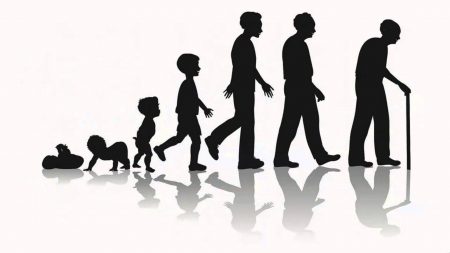
Extending Lives in Males
If this were a how to guide you would be saying “ouch” once I told you the secret.
The secret to longevity in males is:
BECOME A EUNUCH
That’s right. Even better, become a Korean eunuch.
Scientists studying Korean historical records have found that eunuchs castrated in childhood lived longer lives than their than non-castrated Korean male neighbours.
The results of the study entitled, “The Lifespan of Korean Eunuchs,” has been published in Current Biology. It seems that sex hormones and the drive to reproduce impact longevity in males. The study looked at genealogical records of 81 eunuchs and calculated that on average they lived between 14.4 and 19.1 years longer than non-castrated Korean males of equivalent socio-economic status.
The study correlated its research observations with evidence in males of other mammalian species that showed shorter lifespans versus females. The culprit, it concludes, is testosterone, the male hormone which it states impacts the male immune system. And because castrated males don’t generate testosterone they live longer.
The study relied on a genealogy record of eunuch-family histories called the Yang-Se-Gye-Bo, written in 1805 by Yoon-Muk Lee. In this record are the birth dates, place of birth and death dates of 385 court eunuchs. To come up with its comparisons the study tracked 81 lifespans against non-eunuch males with similar social and economic status living in the same time periods. Three of these eunuchs lived to become centenarians. Interestingly the rate of centenarian eunuchs from these records is 130 times higher than that found in nations of the Developed World today.
Current rates for centenarians in Japan, the country with the highest number is 1:3,500.
The ratio of centenarians to the population in the United States is 1:4,400.
So, in conclusion, for all my male readers who want to live longer you know what to do. Yikes!

Want to Overcome Shyness, Get Toxoplasmosis
Toxoplasmosis is a parasitic infection caused by Toxoplasma gondii and can be found in humans worldwide. Cats are the most common hosts although birds and other mammals can be infected and transmit the disease to humans.
In North America the most common cause of human infections comes from carelessly handling cat litter. Symptoms usually begin to show up a week or two after exposure. These include enlarged lymph nodes in the head and neck, fever, headaches, muscle pain or a sore throat. For people with compromised immune systems, toxoplasmosis can be very dangerous.
But a recent study has discovered a previously unknown symptom of this parasitic infection. It appears that Toxoplasma gondii causes infected men and women to become more extroverted and less conscientious. Apparently the parasite affects brain chemistry manipulating the behaviour of those it infects by increasing dopamine and altering other hormone levels.
Those with toxoplasmosis have higher rates of traffic accidents. Males infected by the parasite were less conscientious. Schizophrenics showed higher than normal infection rates suggesting that the parasite may alter their brain chemistry contributing to the condition.
Toxoplasmosis infects about 22.5% of Americans aged 12 or older today. Not all are infected by handling cat litter. Undercooked or contaminated meat, unwashed fruits and vegetables, and contaminated soil are also sources of the parasitic infection.
The study appeared in the European Journal of Personality.

]]>
Our Biological Limits
In the latter part of the 18th century the average human lived 24 years. By the end of the 19th the average lifespan had doubled. In the second decade of the 21st century we are approaching a doubling again. Is there a biological limit?
We are the sum of our genetics. How long your parents lived may indicate how long you will live. But then again it may not. We know that altering genes can alter the lifespan of animals and plants we study in laboratories. We have doubled the lifespan of mice by splicing genetic material into their chromosomes.

In an earlier blog we described the structure of DNA, genes, base pairs and chromosomes. It may be helpful to click on the link provided as a quick refresher before reading further.
We have two DNA repositories in every cell in our body (blood cells not included). That DNA is found in the nucleus and mitochondria within the cell. The DNA organizes itself as chromosomes. When cells replicate the chromosomes divide and copy themselves. This is called mitosis.
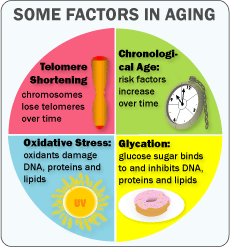
Telomeres are repeating DNA base pair sequences that sit at the end of each chromosome. They act as buffers to ensure that DNA replication during mitosis remains accurate. A ribonucleic protein enzyme, telomerase, maintains the telomeres. As cells divide some telomere information does not replicate, usually between 25 and 200 base pairs. The average telomere can be as long as 15,000 base pairs so what is lost is not significant until the cells divide many times. The accumulation of lost base pairs starts adding up.
Why do we lose telomeres? This may be a reflection of our natural aging process, the unwinding of our biological clock so to speak. Or telomeres may shorten because of external forces such as exposure to toxins, disease or injury. Ultimately when chromosomes no longer have a telomere buffer cells they no longer can divide and we call this cellular state senescence. The Hayflick limit, named after the scientist (see the image below) who, in 1961, first discovered this phenomenon, is the natural limit of a cell’s life after multiple replication.

Do all cells have a Hayflick limit? Apparently not as scientists have observed in studying cancer. Tumor cells do not suffer from DNA strand shortening. They can infinitely replicate because in cancer cells telomerase remains active restoring telomere length. Other cells that don’t exhibit the shortening of telomeres include sperm and egg cells. Hormones may impact telomerase activity and telomere lengths. It is believed that estrogen plays a role and may explain why women live on average longer than men.
If we were to alter the behaviour of our normal cells by stimulating telomerase could we reverse the aging process, ending senescence? This is possible. Use of telomerase in laboratory settings has shown that it can confer “immortality” on several types of human cells. That same capability makes telomerase one of the key factors in cancerous tumor cell growth and is leading to research into telomerase inhibitors that would transform cancer cells by starving them of the protein and putting them into senescence.
Telomeres alone do not extend life. If they were the sole means by which we could stop aging we have the technology to produce on mass altered cells containing high levels of telomerase and bank these for use to cure incalculable diseases. Right now scientists believe that stopping telomere shortening may add 10 to 30 years to the average life span. That would mean a child born today could expect to easily achieve an average lifespan of a century.
Other Factors to Consider that Impact Aging
If you are over 60, which I am, your risk dying doubles every 8 years. Research shows that shortening of telomeres only accounts for 4% of the difference. Chronological age and gender account for an additional 33%. The remaining 63% can be attributed to:
Oxidation sounds like a strange contributor to aging. After all, we need oxygen to breathe and a byproduct of this basic life function is oxidants. Oxidants result from oxygen combining with sugar to produce energy and byproducts called free radicals. Not all free radicals are internally produced. They can also come from infections, inflammation, alcohol, smoking, excessive sun exposure, radiation from x-rays and environmental toxins. Free radicals can have a negative impact on individual cells, proteins and fatty tissue. Free radicals over time can build up in the body and are associated with aging. In a recent study the lifespan of worms was increased by 44% by neutralizing oxidants.
Glycation involves excess glucose binding with our DNA, proteins and fats. Excess glucose begins to interfere with normal body tissue functions. The older we get the more the glucose creates health problems contributing to aging let alone body mass. Research shows that restricting calorie intake and selecting foods low in sugar leads to reduced age-related disease and extended lifespans in mice to monkeys.
Inflammation is the body’s natural response against infections and injuries. It also contributes to tissue injury and ultimately to aging. Chronic or persistent inflammation without significant infection is evidence of an immune system that no longer recognizes host body tissue as its own. As we age autoimmune conditions including chronic inflammation become more prevalent. Chronic inflammation destroys normal cells and contributes to the aging of the cardiovascular and nervous system. Inflammation contributes to age-related neurodegenerative diseases, such as Alzheimer’s and Parkinson’s.
Stress harms DNA and speeds the aging process. A study in 2004 showed that psychological stress shortens telomeres in immune cells. Evidence shows that stress, the endocrine system response and the occurrence of disease define age more than chronological aging. Certain diseases occur when anabolic hormone levels start to decline and catabolic hormones start to increase. The latter, such as Cortisol, can contribute to the breakdown of body tissue. As proof of just how much stress contributes to aging and premature death, interviewers who spoke with centenarians found that they exhibited healthy coping strategies in dealing with illness describing their behaviours as accepting, non worrying and taking life one day at a time.
Immune Response refers to the specialized cells generated by our bodies to fight off disease. Researchers in Israel at the Technion studied the natural decline in the immune system as we age. This inability to fight off diseases when we are older is one of the reasons for the statistics about the risks to humans when they reach 60 and over. By suppressing B-lymphocyte immune cells in aging mice and using a drug commonly used to treat rheumatoid arthritis, the mice were able to manufacture healthy replacements using bone marrow. Clinical trials have begun in human populations suffering from B-cell lymphoma.
What are the prospects for human immortality?
The SENS Foundation is dedicated to re-engineering our bodies to end aging through rejuvenation biotechnology. These biotechnologies cover major research areas including cell loss, tissue atrophy, nuclear and mitochondrial mutations, immunotherapy, and targeted ablation. The goals are:
If we eliminate all of these physical processes inherent in aging and develop appropriate delivery systems for restoration and repair some scientists project that we can live 1,000 years. Will someone born in the 21st century be the first millenarian?
]]>