Currently there are 1,970 gene therapy trials on the go globally. The trial breakdown by gene type include antigen studies, representing 21.2%, cytokine studies, 17.7%, tumor supressors, 8%, suicide studies, 7.9%, receptors, 7.6%, growth factor, 7.3%, replication inhibitors, 4.4%, markers, 2.7% and others and unknown at 15.3%.
Of these the MIT Technology Review this week reports several U.S. groups enrolling patients in late-stage trials. These include trials by:
Advantagene, a bio-pharmaceutical company located just outside of Boston, Massachusetts, that is in Phase 3 trials for ProstAtak, a gene transfer technology delivered by vaccine that jump starts the body’s immune system to detect and destroy prostate cancer cells. The therapy is administered in conjunction with radiation therapy and not only attacks the cancerous tumor but also any recurring or remaining cells that linger after the tumor is destroyed. The Phase 3 trial involves 711 male volunteers with half receiving a placebo. Advantagene is also working on other gene therapies including treatments for malignant and pediatric glioma, pancereatic cancer, mesothelioma, ovarian cancer and esophageal cancer.

Amgen, a biotechnology company located in Thousands Oaks, California, that is conducting Phase 3 trials for Ipilimumab, a monoclonal antibody that activates the immune system to fight metastatic melanoma, a skin cancer that often spreads to other organs in the body. European clinical trials show survival rates of 18% after five years, and the Dana-Farber Cancer Institute in Boston has presented findings that after 3 years of treatment show overall survival extended to up to ten years. The drug works by targeting the Cytotoxic T-Lymphocyte Antigen 4 (CTLA-4) which in cancerous patients is inhibited from recognizing and destroying cancer cells. When administered CTLA-4 is enabled so that it attacks the cancer.

AnGes MG, a bio-pharmaceutical company located in Osaka, Japan, that is developing Hepatocyte Growth Factor (HGF), a blood vessel regenerator to cure hepatic diseases caused by ischemia, diabetes, arteriosclerosis and Buerger’s disease (the latter, an inflammatory blood vessel condition brought about by prolonged tobacco use and previously curable only by amputating the affected limb or limbs). HGF targets hepatocytes and other epithelial cells inducing them to regenerate and grow blood vessels within affected tissue. The drug is administered by injection and is in global late-stage clinical trials where it is demonstrating its efficacy.

Bluebird Bio describes itself as a clinical-stage biotechnology company with its headquarters in Cambridge, Massachusetts. It is using gene insertion technology to target beta-thalassemia, adrenoleukodystrophy, retinal disease, chronic lymphocytic leukemia, Hemophilia B and Parkinson’s Disease. It has developed three products. One is Lenti-D which is currently in Phase 2/3 clinical trial for treatment of childhood cerebral adrenoleukodystrophy (CCALD). The second, LentiGlobin is in Phase 1/2 trial for treatment of beta-thalassemia (sickle cell disease). And its third, Chimeric Antigen Receptor or CAR is in preclinical development for the treatment of leukemia and cancerous tumors. All treatments involve modifying the patient’s own T Cells to address the genetic reason for the disease.

Children’s Hospital of Philadelphia (CHOP) has developed a treatment for inherited retinal degeneration, Leber congenital amaurosis (LCA), a very rare form of early onset blindness. The Center for Cellular and Molecular Therapeutics at CHOP uses a genetically engineered adenovirus to carry a normal verison of the gene, RPE65 to repair mutated versions in patients suffering from early onset blindness. They have designated the product AAV2-hRPE65v2. The first clinical trials as reported in 2009 involved 12 patients, ages 8 to 44. Although full eyesight was not restored, 6 patients vision improved enough to no longer classify them as legally blind. Functional improvement was obtained within two weeks after a single injection of genes to produce the proteins needed to make retinal light receptors switch on. Since these early trials CHOP has entered Phase 1/2 clinical studies with a plan for a Phase 3 study prior to getting the product approved for the European Union and the United States. This is expected in 2015.

Cold Genesys is an Irvine, California biotechnology company developing innovative cancer immunotherapy for the treatment of Non-Muscle Invasive Bladder Cancer (NMIBC). Their product, CG0070, is delivered using an adenovirus containing a distinct retinoblastoma gene (RB) disruptive pathway. The adenovirus multiplies within the cancerous cells and delivers its load causing the cells to die. The adenovirus also sets of the immune system using a powerful stimulus called GM-CSF, a cellular signaling molecule. The molecule attracts cells from the immune system to attack the cancer site. Currently the technology is undergoing Phase 2/3 trials.

Henry Ford Hospital, in Detroit, Michigan is in the process of testing its 2nd generation gene therapy products in clinical trials to treat recurrent and newly-diagnosed cases of prostate cancer. In Trial 4 a new and improved adenovirus to deliver the hNIS gene to patients with cancer. The adenovirus is designed not only to attack cancerous cells but also can be watched (see image below) while it works inside the patient using routine medical imaging. The patient receives a radioactive substance commonly used in thyroid scans. Oncologists can study optimal placement of the virus within the prostate gland and can watch how long the virus remains active and how well it spreads. Results have been very encouraging.

The Common Cold
The common cold is associated with 200 virus types. These include rhinovirus of which there are 110 types, coronavirus, 30 types, and a smattering of others such as adenovirus (pictured below), coxsackievirus, echovirus, coxsackievirus, respiratory syncytial virus and enterovirus. Among cold viruses are some that cause even more serious illnesses. These include orthomyxovirus with strains associated with influenza, and paramyxovirus with its parainfluenza virus strains.
With so many cold viruses, developing a cure becomes a challenge. But recently researchers in Cambridge in the United Kingdom have made a discovery that could lead to a way to defeat cold viruses even after they have invaded cells.

To appreciate this discovery it is important to understand how viruses propagate and cause cold symptoms. Viruses cannot replicate by themselves. They need the machinery of the cells they invade to generate copies of themselves. Initially a cold virus is introduced to the body by penetrating through the mucus membranes in the nose and throat. The virus is small enough to slip through the mucus defence barrier. It binds with a surface receptor on cells lining the nose and throat and by doing so gets access to the protein-making machinery within the cell. Using the cell proteins the viruses replicate and rapidly invade nearby cells.
Virus-infected cells emit chemical signatures that attract the body’s immune system to them to fight off the invaders. It is the white cells in the immune system that cause an immune system response which includes the symptoms we associate with a cold: stuffy nose, mucus and phlegm, and the cough response to the irritation and inflammation of the nasal and respiratory membrane.
Colds normally don’t last very long, a few days and a few days going. After a week they are usually gone. But sometimes cold viruses leave the body susceptible to other infectious agents of a far more serious nature. So besides finding a way to defeat the cold for its own sake, there are other good reasons to come up with a cure.
Can We Cure It?
Detection and disruption represent the key strategies for curing the common cold. If our immune system could disrupt the virus before it harnesses the machinery of infected cells, the virus would be unable to replicate and would die. At the Laboratory of Molecular Biology, at Cambridge in the United Kingdom, researchers have discovered that anti-viral antibodies have the ability to ride piggyback on an invading virus as it enters the cell and to kill the virus before it replicates. Previously this had never been observed. Scientists thought antibodies only worked outside cells.
In making this discovery, researchers may be able to harness proteins within the cell to fight the virus. The principal antibody recognition cellular protein is tripartite motif-containing 21 or TRIM21. In a normal cold it takes several days before TRIM21 builds up in cells to fight off the viral invasion. But if a vaccine could boost the TRIM21 response by enhancing its fighting power it could neutralize the virus earlier, disrupting it within a few hours and before the infection leads to immune response symptoms.
The findings were recently published in the Journal Proceedings of the National Academy of Sciences. Before human clinical testing scientists will begin lab animal studies. It is expected that a human vaccine will be available before 2020.
This approach could lead to cures for many other disease caused by viruses including rotavirus and enterovirus, a group of viruses that infect millions of children annually resulting in hundreds of thousands of deaths.
Influenza
In 1918 with the World War coming to an end, a flu epidemic later called the Spanish Flu killed more people than the war it followed. Spanish Flu infected 20% of the world’s population over its two-year run and killed between 20 and 40 million. Those most susceptible were young adults between the ages 20 and 40.
Every year when flu season comes around we are encouraged to get a flu shot. Flu can be deadly and influenza viruses can jump species from animal to human hosts such as H1N1 known as Swine Flu. Where the animal may have acquired immunity over time, the human may not. Hence Swine Flu killed many young people who had no immunity to it, Bird Flu in Asia killed handlers of domestic fowl for the same reason, and SARS, a virus that originated in China and spread by airplane around the world, caused many deaths before isolation controls ended the pandemic.
Flu is very different from the common cold. Its onset is faster and the symptoms are more profound. It infects the respiratory tract from the nose to the lungs. It can in any single flu season, associated with late fall and winter months, infect as much as 20% of the population and kill thousands.
It is caused by three types of influenza viruses labelled A and B and C. C is the mildest and not associated with epidemics or pandemics. Type A influenza includes H1N1 or swine flu and along with Type B are associated with these large-scale outbreaks.
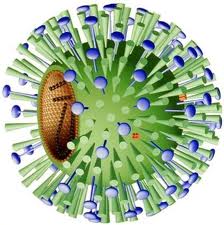
The influenza virus constantly evolves making it very difficult for biomedical researchers to develop infection controls to deal with the changes. Flu vaccines are formulated for the most part to fight last year’s influenza virus variant. Scientists in the Northern Hemisphere get a sneak peek at the next influenza virus when outbreaks occur in the Southern Hemisphere, a 6-month window to develop a vaccine that combines last year’s and the current influenza happening at the opposite side of the planet. The most recent flu pandemic occurred in 2009 with the H1N1 outbreak in Australasia before arriving in North America and Europe. H1N1 resulted in 57 million cases in the United States and 11,690 deaths.
Can We Do Better than the Annual Flu Shot?
The answer is yes and researchers at MIT’s Lincoln Laboratory may have found the answer. They call it DRACO for short. It stands for Double-stranded RNA Activated Caspase Oligomerizer, an antiviral therapy designed to find and kill virus-infected cells, leaving uninfected cells unharmed.
Rather than specifically targeting a single virus DRACO takes a broad-spectrum approach, targeting a type of RNA produced by virus-infected cells. DRACO as a therapeutic cure is not limited to treating influenza. It has the potential to deal with outbreaks of almost any virus.
Through animal studies, MIT researchers identified a form of RNA that only appeared in virus infected cells. Dubbed dsRNA, or double-stranded RNA, the cells natural defence systems attach a protein to the strand in an attempt to block it with the virus countering the cell’s defence every step of the way.
The researchers decided to combine one of these dsRNA-binding proteins with a more lethal protein, one that causes cellular death, known as apoptosis. Apoptosis occurs in cells naturally after many replications when telomeres shorten to the point that the protein initiates the cell’s demise. It also can initiate when a cell begins to exhibit cancerous behaviours.
Through DRACO therapy the naturally occurring apoptosis protein bound to the dsRNA protein can cross the cell membrane of any cells in the body. If no dsRNA is present DRACO leaves the cell unharmed. If dsRNA is present, DRACO initiates cell suicide. Mice treated with DRACO were completely free of viral infections with no toxic side effects. Clinical human trials are not too far in the future.
]]>Is everyone susceptible to addiction? It’s a good question because environment may be a strong determining factor.
What motivates someone to try an addictive substance? Often it’s curiosity. Other times it’s stress brought about by circumstances. Sometimes it’s peer pressure, a wish to be a part of a social group, sharing something in common. So circumstances play a role in susceptibility.
What makes an addictive drug work?
Why does our body accept this type of foreign substance?
The chemical structure of most addictive drugs mimics brain chemistry fooling our neurons and in particular neural receptors.
Let’s look at marijuana as an example.
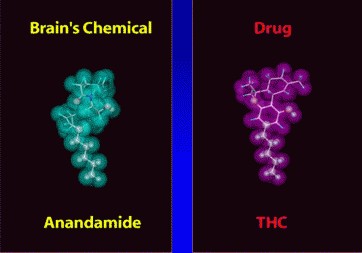
The active chemical in marijuana is THC (tetrahydrocannibol). As you can see from the illustration above THC (on right) is a fairly complex molecule. It is fat-soluble allowing it to slip through the barrier that isolates the brain from the rest of our body systems. THC binds with a neural receptor that is the same one used by a naturally occurring molecule, Anandamide (the molecule on the left).
First identified in 1992, Anandamide was discovered by Dr. William Devane at University of Wisconsin, and Dr. Raphael Mechoulam, at Hebrew University of Jerusalem. Synthesized in an area of the brain that governs memory, higher thought processes and body movement, the two researchers named it after the Sanskrit word that means bliss. Why? Because in finding Anandamide these researchers were identifying the natural human-generated equivalent to THC, a chemical that regulates pain, appetite, mood and short-term memory in the brain.
How do Addictive Drugs Interact with Our Brains?
Neural receptors are the key to nerve cell communication. Chemicals that mimic those naturally produced need a way to take part in that communication. In the example we have looked at THC versus Anandamide, the former binds with receptors on the surface of nerve cells in the same way as the latter.
Anandamide is a “key” molecule because it unlocks a cell by binding with receptors on the cell surface. It does this because its shape fits the receptor like a key entering a lock. When it interacts a door opens through the cell membrane causing a flood of chemicals to enter the nerve cell affecting its positive or negative charge.
THC does exactly the same thing because its shape can also bind with the neuron receptor. The difference in the body response to THC versus Anandamide is one of duration. Where Anandamide is fragile and very short-lived, THC is far more robust. So the bliss effect of Anandamide is short-lived, where the bliss effect of THC can go on for a long time producing the perpetual “high” associated with smoking marijuana.
Most of the drugs we use for pain management work in a similar way. Morphine locks into an opiate receptor in nerve cells. Its natural molecular equivalent is enkephalin. Morphine is addictive because when it binds with a nerve cell receptor it locks even tighter than enkephalin and remains attached. Pharmaceutical companies recognized the addictive nature of morphine and developed less potent substitutes like codeine and demerol.
Addictive drugs elevate another brain-synthesized molecular chemical, dopamine. Dopamine acts like adrenaline affecting the brain processes that govern emotional response, pleasure, pain and body movement. Excessive dopamine creates brain euphoria. Drugs that induce strong dopamine responses are called dopamine agonists. Cocaine is one of these. It binds with the dopamine receptor on the surface of a neuron inducing an excessive dopamine response.
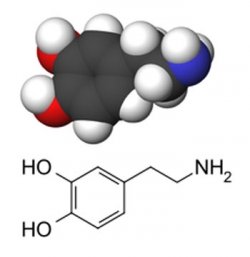
Over time neurons exposed to drugs like cocaine and amphetamines become desensitized or tolerant to dopamine. In these cases each exposure produces less of drug response. The neurons, in anticipation of the drug, stay in a state of stimulation requiring more to create the same effect. How cocaine does this is by binding and hanging on to the proteins that transport dopamine and remaining longer elevating the dopamine response. Amphetamines work similarly leading to over stimulation of the neurons.
Is There an Addiction Vaccine in the Near Future?
Traditional treatments for addiction have involved finding a less addictive drug such as methadone to help reduce heroin dependency, or using a nicotine patch to help stop smoking. Another drug, Vivitrol, has been used to treat alcoholism and opium addiction. There are even anti-smoking pills that don’t act as drug mimics but instead inhibit the neural receptors.
A vaccine approach pursued since the 1970s, has only recently been able to see dramatic progress in creating cocaine immunity. Dr. Ronald Crystal, at Weill Cornell Medical College, has led a team that has produced a vaccine to treat cocaine addiction.
The vaccine was created from a modified version of the adenovirus, the virus for the common cold, discarding the content that causes colds and using the remainder as a carrier medium. A molecule constructed to resemble cocaine is injected into the adenovirus and when a human is vaccinated results in an immune system response. The reason for using the adenovirus is simple. Most addictive drugs are too small for detection by the immune system which allows them to get by the body’s defences. By combining the synthesized drug molecules with a carrier already recognized as pathogen, the immune system learns to attack the smaller drug molecules as pathogens as well so they never reach the neural receptors of the brain. In laboratory tests the vaccine’s effect lasted more than 13 weeks causing an immune response anytime mice “snorted” cocaine.
A similar medical project has used a modified cholera bacteria as a transport mechanism with cocaine creating an immune system response to produce antibodies. In 2009 Baylor College of Medicine in Houston ran clinical trials using this cholera-based anti-addiction cocaine vaccine with 115 human subjects. The results showed a strong antibody response in 38% of patients who received the vaccine, and 45% of remained cocaine free in follow-up examinations up to 4 months after. The vaccine is currently in national clinical trials in the United States. Eventually vaccines of this type could be delivered regularly much the way some people take allergy shots, continually boosting the immune response and eliminating the negative body responses to cocaine ingestion.
Recent researchers at The Scripps Research Institute have had successful results developing a similar vaccine for heroin addiction and have tested it in animal models.
Research into vaccines focused on treating smokers for nicotine addiction is on the way. But alcoholism, the most prevalent addiction, remains untreatable through vaccination.
Considering the cost society bears to deal with addiction, policing the illegal drug trade. and the cost of incarceration for repeat drug dealers and offenders, anti-addiction vaccinations represent a better future.
]]>