
If unfamiliar with the terms, Gen Xers refers to the generation born after the post-World War II baby boom. Their birth dates range from the 1960s to the early 1980s. Gen Ys, also known as millennials were born after 1980 reaching adulthood in the year 2000 or later. The late Gen Xers and some early Gen Ys represent “The Current Thinking” seen in the chart above. Late Gen Ys will experience “The New Timetable.” So if you were born in 1991 you can expect to follow the latter rather than the former.
What made me look more closely at this table is the first two lines, “post-secondary education” and “establishing a career.” Whereas those born from the mid-1960s to 1980s had expectations that education would immediately lead to career upon graduation, those born after find themselves extending education and even then experiencing career uncertainty upon entering the job market.
In a quote from the chairperson of Infosys Foundation USA, Vandana Sikka she states, “Young students need to understand that education alone should not be expected to fully prepare them for a job, because the skills they need to be successful in their work will continually change as industries transform. Their success, therefore, will depend on their ability to learn and they must have a mindset of learning for life.”
What role should companies play in ensuring that young people can have career aspirations while constantly learning to adapt to the disruptive changes brought on by the 4th Industrial Revolution? When I graduated from university in 1973 the company I went to work for provided a week-long training program to help me understand the work involved. How many companies still provide that kind of training investment in new employees?
Somehow from the 1980s onward companies stopped playing a significant role in educating their new work forces and transferred that responsibility to post-secondary education providers. The burden of applied learning became not just a community college deliverable, but also one that universities were asked to provide.
Who is better at predicting what skill sets a business needs now and in the future? One would argue that the leadership within the business would provide the vision for future required skills. Sikka in a YouTube video talks about the millions of jobs that will arise in the next five years requiring skills we may not have anticipated.

For colleges and universities to educate students they must use broad brush strokes and one wonders how often they will guess right when they attempt to drill down on future job requirements. So as much as educators can approach the 4th Industrial Revolution with curriculum focused on complex problem solving, critical thinking and creativity, although these are flexible skill sets, they cannot provide a high level of specificity. Their work is to give learners adaptability advantages which employers can then build upon with additional training.
One aspect of the 4th Industrial Revolution we are already observing is that lifelong learners are not necessarily workers dedicated to a single employer. The reality of the age is adaptive learners can and may work for multiple companies in a lifetime, let alone every day. The future workplace may be dominated by freelancers.
Some businesses get it and incorporate the adaptive learning style into corporate culture. One of those is Alphabet, the renamed Google. The company has demonstrated from its founding that it understands what adaptive learning means in its workforce. It is the idea behind 20% self-time, a Google creation that has paid many dividends. Still practised but not as much as it was when the company first got started, 20% self-time gives an employee the the opportunity to spend 20% of each week working on anything he or she finds appealing. This freedom to explore and build new things benefits the company as new ideas percolate, are shared and critiqued, further massaged and perfected, and sometimes turned into products benefiting both the inventor and the company. That’s how Gmail and Autocomplete came to be.
Alphabet’s corporate leaders know they have a responsibility to marry prospective employees exposed to 4th Industrial Revolution education with the company mission and vision. The critical skills described in Part Two of this series are what the company is exploiting in its workplace And as artificial intelligence becomes more pervasive, it is these adaptive learning skills that exploit human creativity and critical problem solving combined with interpersonal rapport, that will be the high demand soft skills of the 21st century.
A final note, remember the goals first described in the chart that appears at the top of this article? The bottom three are not attainable without success in the first two. An educational system embraced by both academic institutions and employers will be necessary to give Gen Y learners in the 4th Industrial Revolution the ability to raise a family, buy a home and fulfill all their other dreams here in the 21st century.
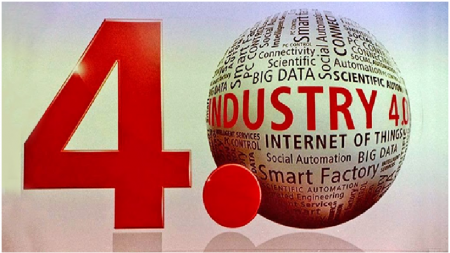
Canada’s federal budget, announced in March, pledged $800 million CDN to support “clusters…where innovation will happen.” The University of Waterloo is one of those clusters with the Kitchener-Waterloo, Ontario, area somewhat akin to Silicon Valley, in California, with two universities, a community college, Blackberry, the Perimeter Institute, and many new venture high technology startups.
In his speech Hamdullahpur stated, “the traditional university model hasn’t kept up” with the complexities of the 4th Industrial Revolution. He continued, “traditional universities take kids from high school, bolt even more knowledge onto them, and then – in the hope they’ve matured by graduation day – let industry sort them out as they start their careers.” He further states that this type of learning model although replicable, “takes too long” in today’s world of continuous disruptive change.
How University of Waterloo intends to address the current state of post-secondary learning is “to wrap the student experience in three enriching layers: entrepreneurship, exposure to research, and co-operative education.” For the university to become an accelerated incubator capable of being thought leader in driving disruptive change it means creating learning disciplines not reflected in current curricula. It means tackling the hot button fields of the 21st century such as genomics, robotics, artificial intelligence, biomedicine, quantum science, and renewable energy, combining theoretical underpinnings with a dynamic research focused environment aimed at creating new technological solutions. It means creating a collaborative environment that brings industry into the mix.
For Hamdullahpur the gauntlet thrown is to have universities disrupt themselves. In his concluding remarks he stated, “students know the world is changing. They want to be relevant not just today, but 20, 30, 40 years from now. They know they’re inheriting an economy — and career prospects — defined by volatility and technology.” The ultimate goal as he foresees it is to make post-secondary education “disruption-proof.”

But starting to educate for the 4th Industrial Revolution in the world of post-secondary institutions seems to be coming to the 21st century table a bit late in the process. It is in the world of elementary and high schools where young people can begin to build learning skills necessary to master the 4th Industrial Revolution. What are these skills:
The World Economic Forum has defined them as follows:
What amazes me about this list is the lack of traditional curriculum content, the three Rs: reading, writing and ‘rithmetic. And yet problem solving, critical thinking and creativity all require high levels of these skills.
So what should learning to solve complex problems look like?
Some have called complex problem solving “a field in search of a definition.”
How do you teach it?
How does it differ from problem solving?
Is it that adding the word “complex” removes theory and methodology and replaces it with “oblique” or “outside the box thinking?”
How can you teach that?
One way is to get students to use technology at hand to tackle an issue, exercising their brains just as weightlifting builds muscles. This is called neuroplasticity and it is evident in the way babies learn but lessens as we approach adulthood because we don’t exercise it.
To encourage neuroplasticity have students tackle a challenge that requires them to build simulations or models. Have them observe, analyze and compile data they get from whatever they have built. Then get them to teach others what they have observed and learned. Through this process learning fundamentals get addressed. For example, the challenge may need mathematics, programming skills, and analytical tools to make observations relevant. In this way one can start small and less complex projects and then move to highly complex ones in a similar ascension to moving from primary to secondary grades. In the end students become preeminent complex problem solvers.
I have seen this demonstrated. A number of years ago I was promoting an after-school and camp program, Children’s Technology Workshop (CTW). CTW engaged children with high technology and creative projects. Children could become engineers, create movies, design computer video games, and do animation. The learning method of CTW was “constructionism,” first described by Jean Piaget, the clinical psychologist known for his theory of cognitive development. Later Seymour Papert, an MIT mathematician, computer scientist and educator, built on Piaget’s work. Papert, who authored “The Connected Family: Bridging the Digital Generation Gap” in 1996, and “Mindstorms: Children, Computers, and Powerful Ideas,” in 2007, described a process of learning by building. He saw the dawn of the personal computer as fundamental to the progressive change in a child’s relationship with knowledge.
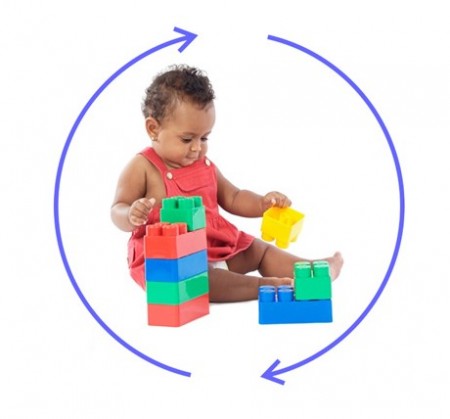
In Papert’s world through constructionism children learn mathematics because they want to learn it to help them build a LEGO(R) model or design a video game. The reliance on instruction goes away because of self motivation. And the learning really takes hold when the child shares the end product of his or her creation and has to explain it to others.Talking to and with others reinforces the learning.
What Papert is describing is essentially complex problem solving, critical thinking, creativity and people management all in one. That’s not a bad start on the way to building the necessary skill sets young people need to become masters of the 4th Industrial Revolution rather than its victims. And although Hamdullahpur in his speech talked about applying entrepreneurship and co-operative education to post-secondary learning, in my opinion, this seems late in the game. Instead it needs to be incubated well before college and university ensuring that brain’s plasticity gets fully exercised throughout a lifetime.
Related articles across the web
The term 4th Industrial Revolution was bandied about at the recent meeting of the World Economic Forum held in Davos, Switzerland. To what does it refer?
The words “robotics,” “artificial intelligence,” “genomics,” “autonomous vehicles,” “mobile computing,” “smartphone,” “virtual reality,” “Internet of Things,” “3D printing,” “metadata,” “analytics,” “crowdfunding,” “crowdsourcing,” and other disruptive technologies and applications are at the centre of what is conceived to be the 4th Industrial Revolution. Building on the 3rd Industrial Revolution, the data revolution dominated by the arrival of computers, digital networks, the Internet and global telecommunications, the 4th is seen as a convergence of the physical, digital and biological worlds. It is seen as impacting all types of work, all types of industries, and all humanity. Adapting to it is proving to be frightening for many who see their jobs in peril. Adapting to it is seen by others to be empowering, lifting billions from poverty and leveling the global playing field. For some that convergence is leading to a point in time when humanity and the machines it has created will become one, the “Singularity.”
Whether or not the “Singularity” ever occurs, it was clear to those who met at the Davos World Economic Forum with its theme “Mastering the Fourth Industrial Revolution,“ that humanity was entering a new age which Klaus Schwab, founder of the Forum described as one “affecting our lives and reshaping our economic, social, cultural, and human environments. There has never been a time of greater promise, or greater peril.”

Robert Shiller, 2013 Nobel Prize winner in Economics, a participant, commented in terms that sound much like Franklin Delano Roosevelt’s explanation of Lend Lease when he said, “You cannot wait until a house burns down to buy fire insurance on it. We cannot wait until there are massive dislocations in our society to prepare for the Fourth Industrial Revolution.”
In our inventiveness it has led us to the point where humanity must declare a non-shooting war on the future by altering the education paradigm. Only in this way can we ensure this generation and the ones to follow will be able to ride the 4th Industrial Revolution to a successful outcome. Either we will all be endowed with super powers in this new world we are creating or many of us will be left behind to become victims of our own inventiveness.
So how can teaching and education change or does it have to? What is the essence of 21st century learning? Is incorporating all of these technological innovations into the physical classroom the methodology of choice? Is that even possible or affordable?
A recently published report by the Global Schools Leadership Alliance attempts to address these questions. It examines “the career and education realities of young people across nine major economies” and provides insights on how the “21st century classroom” needs to evolve.
The report states the following:
Despite the many challenges young people face in terms of job aspirations most remain optimistic. The report polled 72% as feeling, despite “boring and old-fashioned” education, that they still see the classroom as relevant to their future careers. But many educators express concern that no level of formal classroom learning can adequately prepare young people for the “fast-paced, changeable nature of working life.” It is incumbent, therefore, “a commitment to train employees on the job is needed to fill this gap between education and new employment.”
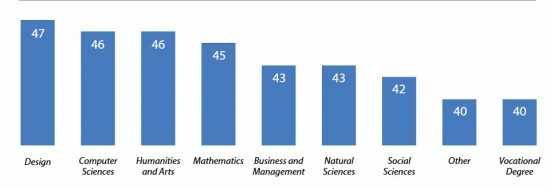
An interesting survey of students working in a variety of disciplines, when asked if education prepared them for what to expect in working life, responded negatively. When asked if they had to learn new skills not taught to them in school, to do their jobs, 73% agreed or agreed strongly. For many disciplines, even those where one would think formal education could more than adequately prepare students for work, the percentages indicating the need to learn new skills ranged from 40 to 47% (see graph below).
States Rick Goings, Chairman and CEO of Tupperware Brands Corporation, “we think training is very important because we believe in general in universities; even graduate school is absolutely too focused on cognitive skills. We will have many young people entering employment and there has been almost no appreciation or development of non-cognitive skills.”
In Part 2 of this series we will look at how classrooms are attempting to adapt to 4th Industrial Revolution and the tools they are using or considering. In Part 3 we will explore the role of business in educating and training present and future employees.
]]>


