Peter believes “we owe the next generation” what he calls “AI-powered education.” He explains how it can already work using the example of Khan Academy and the personal story of a young woman from Afghanistan named Sultana. It’s a great story!
Alongside healthcare, I can’t think of another field more in need of reinvention than education. Some teachers and schools have come out saying that using generative AI tools is a form of cheating, and others have banned them altogether. But as Stability AI CEO Emad Mostaque notes:
“Education isn’t about competition. We made it a competition. It’s about actuation.”
An alternative vision of education powered by AI is about the learning process becoming more personalized and effective.
Imagine a future where every student has their own personalized AI that is customized for them and looks out for them. Are you a visual learner? Do you learn best through listening? Are you dyslexic?
Imagine an AI that uses an iPad’s forward-looking camera to study a student’s facial expressions as a lesson is being delivered. If the student looks confused or bored, the AI can change tack, adjusting the lesson accordingly from a different point of view, or at a different level of complexity.
Imagine a future where a teacher’s AI assistant adapts to each student’s learning style and pace, offering personalized education, and incorporating a student’s favourite sports stars or movie stars into the curriculum. It can track a given student’s progress, identify trouble areas, and optimize on the fly.
Beyond AI alone, the combination of AI and VR together promises to make learning “experiential” and “immersive,” delivering lessons that are unforgettable and hyper-personalized.
I remember as a child going to Greek School to learn about my heritage, and then at MIT taking a course on ancient cultures covering Socrates, Plato, and Aristotle. Whatever way you cut it, reading historical textbooks about philosophy is difficult at best. Imagine instead, entering an interactive VR world set in ancient Greece, surrounded by a vibrant Agora, encircled by bustling crowds, lively debates, and the grand architecture of a flourishing city-state at the pinnacle of its cultural and intellectual achievements.
As you traverse the cobblestone pathways, an arresting figure captures your attention. Seated on a marble plinth, an elderly man exudes an air of wisdom. His physique is draped in the unadorned elegance of a white toga, a white beard frames his gaze. With a graceful rise, he beckons you forward and extends his hand. “Greetings, traveller,” he proclaims with a genial smile, “I am Socrates, your guide here in Athens. May I show you around and answer your questions?” Embracing his invitation, you find yourself wandering alongside the philosopher, meandering through the vibrant streets. As you walk, Socrates, with a storyteller’s flair, illustrates the daily routines of Athenian life, while recounting local politics and recent history. He guides you towards the Acropolis that rises like a crown above the city and introduces you to his many friends and pupils as you walk.
The generative AI imagery and experience are so immersive and compelling that you forget you’re in VR. It feels more like a real-life experience. Perhaps most importantly, everything this AI version of Socrates says and does is driven by a fully validated large language model (LLM) built upon historical consensus.
In this fashion, AI in partnership with VR will allow us to experience the greatest moments in human history ranging from the signing of the Declaration of Independence alongside Thomas Jefferson and John Adams to walking on the surface of the Moon with Neil Armstrong and Buzz Aldrin.
When I think about digitizing, dematerializing, demonetizing, and democratizing education, one of the most impactful stories I’ve ever heard was told to me by Sal Khan, Founder and CEO of Khan Academy.
Sometimes a single individual’s story can best exemplify the power of a new technology to transform a field. This is one such story about a young girl in Afghanistan named Sultana who used Khan Academy to educate herself and change the course of her life. Sultana grew up in Afghanistan, and when the Taliban took over her town, they forbade all the young girls from going to school. Khan Academy became her lifeline. She studied everything from elementary school math to algebra and trigonometry, eventually moving on to physics, chemistry, and other subjects. Without access to school or teachers, she used Khan Academy’s free online lessons and courses, all from the safety of her home.
Here’s how Sultana later described the experience in a 2021 article in The Economist:
“Armed with an iPad, the internet and a free education website called Khan Academy, I taught myself English. And philosophy. And math. And science. And history. I wanted to understand the world in every way possible, and my place in it. Solving math problems gave structure to the uncertain world I was living in, even if just in my head. I felt liberated when I first learned to make a graph of a linear equation. On the page, drawing a two-dimensional coordinate plane and graphing an equation, the world was in my control.”
Sultana then decided that she wanted to be a theoretical physicist in the United States. So, she smuggled herself into Pakistan to take the SAT because the test wasn’t offered in Afghanistan. She passed. Soon after, she was admitted to Arizona State University, graduating with honours!
Where’s Sultana now? She’s currently a member of the research faculty at Tufts University studying quantum computing.
Since Sultana’s success, the Khan Academy has super-charged its platform using generative AI powered by GPT-4 from OpenAI. The new product is called Khanmigo, an AI-powered teaching assistant, that can amplify the power to educate and ultimately help humanity enable many more Sultanas in our future.
Announced in March 2023, Khanmigo adopts an AI-powered Socratic, narrative-driven approach to engage students. It promises to make learning easier and more efficient, functioning as a personal tutor that engages students interactively, assisting with meaningful exercises, diagnosing mistakes and encouraging understanding over memorization.
Khanmigo is designed to understand students’ reasoning, a departure from traditional rote methods of learning. It contextualizes learning to a student’s interest, asking probing questions to reveal practical applications of academic concepts.
Khanmigo’s integration into the educational process is showcased through interactive features such as reading comprehension aids, AI memory for ongoing interactions, and narrative progress reports. Future updates will soon include voice interaction and multi-user activities.
Khanmigo is not a replacement for human teachers. Instead, it serves as an assistant to educators, allowing them to focus on fostering critical human skills such as judgment and creativity. It also provides recorded AI conversations for review, while supporting grading, lesson planning, and providing personalized guidance, aiming to reduce teacher workload.
Given how fast everything is changing, we need to keep the world from revolting at the rate of disruption. This means giving people access to high-quality education and helping them believe that they have a future that is compelling and abundant. AI in education creates a compelling way to teach and learn, independent of where you live and how wealthy you are. If that’s not democratization in learning, what is?
]]>Expeditions uses Google Cardboard (its virtual reality headset) and tablet.

A kit containing all the electronics plus the headsets can be purchased from the electronics retailer, Best Buy. Bundle prices start at $3,999 U.S. which provides a fully-outfitted kit for 10 students plus Geek Squad white glove technical service and support.
Teachers with technical chops can make up their own kits starting with the Expeditions app and purchasing Android tablets running Android 4.4 or higher and smartphones with Android 5.0 or higher. Minimal smartphone specifications include:

In the United Kingdom classrooms are about to gain the benefit of efforts at Open University which is conducting research into the use of Google Expeditions and virtual reality to advance the future of teaching and learning. Led by Professor Shailey Minocha the goal is to introduce the technology to schools throughout the UK as well as integrate it into Open University’s own post-secondary curriculum.
States Minocha, “Our previous research has shown that the high degree of realism now achievable in virtual field trips complement the physical field trip experience…Virtual field trips also make it possible to experience activities and locations that may be impossible, or extremely difficult, to arrange in real life.”
You got to give kudos to Google for making a major investment in 21st century learning. They have put together an online Education Training Center that includes training material for teachers to help them facilitate learning and creativity in students including the use of virtual reality. Teachers access lesson plan modules and reference resources that can be brought into the classroom. The program encourages teachers to contribute original authored material to enhance the use of Google technology for education.
If you haven’t visited the Google Education Training Center you might want to take a look, particularly if you are a teacher or parent. I checked out one of the free activities, a Google Expedition to study Coral Bleaching and Ocean Acidification aimed at Grade 12 marine biology studies. The lesson includes expedition slides illustrating the role carbon dioxide (CO2) in the ocean. Students learn about CO2 as a pollutant and as the primary source of acidifcation and principle cause of coral bleaching.
There are many free and low cost courses offered on the site. Many don’t use virtual reality and the range goes from pre-K to Grade 12. A sampling of a few of the virtual reality curriculum that is free is listed below:
What makes Google Cardboard and Expeditions an attractive option for educators? In the past virtual reality was seen as extremely expensive for classroom use. Headsets and the other gear plus training put the cost out of reach for most school boards. But Google Expedition is changing that. The viewers are cheap and most new smartphone models can work with the headset. And the BestBuy offer works out to less than $400 per student.
Other virtual reality players are not unaware of Google’s effort. Samsung has been offering free Gear virtual reality headsets with pre-orders of its latest Galaxy smartphone models. And Nearpod, a virtual reality headset developer, is offering free kits to school districts in the United States.
]]>The term 4th Industrial Revolution was bandied about at the recent meeting of the World Economic Forum held in Davos, Switzerland. To what does it refer?
The words “robotics,” “artificial intelligence,” “genomics,” “autonomous vehicles,” “mobile computing,” “smartphone,” “virtual reality,” “Internet of Things,” “3D printing,” “metadata,” “analytics,” “crowdfunding,” “crowdsourcing,” and other disruptive technologies and applications are at the centre of what is conceived to be the 4th Industrial Revolution. Building on the 3rd Industrial Revolution, the data revolution dominated by the arrival of computers, digital networks, the Internet and global telecommunications, the 4th is seen as a convergence of the physical, digital and biological worlds. It is seen as impacting all types of work, all types of industries, and all humanity. Adapting to it is proving to be frightening for many who see their jobs in peril. Adapting to it is seen by others to be empowering, lifting billions from poverty and leveling the global playing field. For some that convergence is leading to a point in time when humanity and the machines it has created will become one, the “Singularity.”
Whether or not the “Singularity” ever occurs, it was clear to those who met at the Davos World Economic Forum with its theme “Mastering the Fourth Industrial Revolution,“ that humanity was entering a new age which Klaus Schwab, founder of the Forum described as one “affecting our lives and reshaping our economic, social, cultural, and human environments. There has never been a time of greater promise, or greater peril.”

Robert Shiller, 2013 Nobel Prize winner in Economics, a participant, commented in terms that sound much like Franklin Delano Roosevelt’s explanation of Lend Lease when he said, “You cannot wait until a house burns down to buy fire insurance on it. We cannot wait until there are massive dislocations in our society to prepare for the Fourth Industrial Revolution.”
In our inventiveness it has led us to the point where humanity must declare a non-shooting war on the future by altering the education paradigm. Only in this way can we ensure this generation and the ones to follow will be able to ride the 4th Industrial Revolution to a successful outcome. Either we will all be endowed with super powers in this new world we are creating or many of us will be left behind to become victims of our own inventiveness.
So how can teaching and education change or does it have to? What is the essence of 21st century learning? Is incorporating all of these technological innovations into the physical classroom the methodology of choice? Is that even possible or affordable?
A recently published report by the Global Schools Leadership Alliance attempts to address these questions. It examines “the career and education realities of young people across nine major economies” and provides insights on how the “21st century classroom” needs to evolve.
The report states the following:
Despite the many challenges young people face in terms of job aspirations most remain optimistic. The report polled 72% as feeling, despite “boring and old-fashioned” education, that they still see the classroom as relevant to their future careers. But many educators express concern that no level of formal classroom learning can adequately prepare young people for the “fast-paced, changeable nature of working life.” It is incumbent, therefore, “a commitment to train employees on the job is needed to fill this gap between education and new employment.”
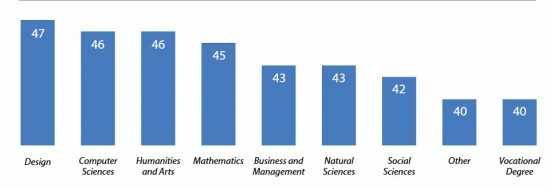
An interesting survey of students working in a variety of disciplines, when asked if education prepared them for what to expect in working life, responded negatively. When asked if they had to learn new skills not taught to them in school, to do their jobs, 73% agreed or agreed strongly. For many disciplines, even those where one would think formal education could more than adequately prepare students for work, the percentages indicating the need to learn new skills ranged from 40 to 47% (see graph below).
States Rick Goings, Chairman and CEO of Tupperware Brands Corporation, “we think training is very important because we believe in general in universities; even graduate school is absolutely too focused on cognitive skills. We will have many young people entering employment and there has been almost no appreciation or development of non-cognitive skills.”
In Part 2 of this series we will look at how classrooms are attempting to adapt to 4th Industrial Revolution and the tools they are using or considering. In Part 3 we will explore the role of business in educating and training present and future employees.
]]>