
The memoru of the Hindenburg disaster is long in the past and hydrogen and Germany are once more crossing paths in two interesting projects.
Creating a Hydrogen Fueling Infrastructure
Germany is building a network of hydrogen fueling stations with Royal Dutch Shell the primary contractor. The goal is to have 400 across the country by 2023. Shell is betting on hydrogen to be a common energy source for fuel cell cars and trucks in the next decade. Germany is planning to eventually build 700 sites, considered optimal for maximizing the operation of hydrogen-fueled vehicles.
To top up a hydrogen car takes about the same amount of time as traditional gasoline and diesel. Cost is about the same as well. And hydrogen has no range anxiety issues because fuel cell cars go just as far as gasoline and diesel.

Shell opened its first hydrogen station in Germany in 2011. Today it operates less than 20 across the country. Hydrogen is sourced from natural gas using steam-methane reformation. Shell is experimenting using water as the source, applying an electrolytic process as an alternative. That would make hydrogen a zero-carbon fuel. Storage requires cryogenic liquid compression and insulated tanks. These are triple-layered and made from woven carbon fibers.
Building a Hydrail
Germany’s second project is the building of a hydrogen-powered train network. Alstom, the French rail transport company is finishing the first one called the Coradia iLint. This 300-passenger train can run on any existing rail line within Germany, electrified or not. The train is quiet and emission free. The power source is fuel cells which generate electricity to drive traction motors. The hydrogen for Coradia iLint will be sourced from waste products produced by Germany’s chemical industry. The byproducts of these new trains are zero carbon, just condensed water and steam. The first is scheduled to start operations next December. Germany eventually plans to have 40 hydrail trains in operation with a target date of 2020.

Will a hydrogen fueling infrastructure and fuel cell passenger trains put German citizens at risk? Is there a chance the use of hydrogen will spawn “little Hindenburgs” blowing up from time to time?
Not according to Toyota who is building hydrogen fuel cell cars. Its Mirai, will be available in California and Japan this year. Toyota describes hydrogen as far less a fire hazard than gasoline or diesel even though the gas is 90% more volatile than those fuels. The reason why, hydrogen is 16 times lighter than normal air. On the Mirai the gas gets compressed to 69,000 kilo-Pascals (10,000 pounds per square inch). Stored in a carbon-fiber tank, if it springs a leak, hydrogen will immediately dissipate into the surrounding air. Not so with gasoline which in liquid or vapour can instantly become a fire hazard.
]]>The company has developed a proprietary system combining software, hardware and third-party renewable energy solutions. Its software can analyze multiple sources of information including on the ground and satellite data to quickly determine a sites suitability for a microgrid. It then chooses the best renewable energy technologies, backed up by battery storage, and combines them with proprietary smart meters, inverters and a cloud-based management system for continuous oversight.
In 2015 the company established its first African subsidiary. Powerhouse East Africa Ltd., is the first private provider of energy in Kenya. Prior to its launch Powerhouse worked out the kinks at four pilot project sites in Kisii, Kenya. To motivate its first 300 customers upfront payments were kept low. In addition each was given a mobile app to monitor their own energy use and manage payment. Mobile payments are big in Kenya. The build-out used local materials and labour. Installed capacity amounted to 80 Kilowatts. The illustration below is of a typical Powerhouse microgrid site.

What are the challenges of microgrids?
It is not in deployment so much as in ensuring that all customers get power and that no one customer steals power from the rest. Reliable continuous power is another challenge. In the past when microgrids failed in remote areas it could take days to get them up and running again. Powerhouse wants to attain the kind of reliability in its microgrids that can be found in power grids throughout the Developed World.
The gold standard for reliability set by telecommunications companies is “five 9s” which means uptime of 99.999% which translates to downtime of less than 2 minutes per year. Many national power grids in the Developed World approach that standard but in the Developing World such reliability has been unattainable to date even from national grids.
Powerhive’s solution provides them with access to their installed microgrids through the Internet, giving them the means to monitor and provide remote troubleshooting continuously 24/7. A typical microgrid includes a community of homes each equipped with a smart meter and a base number of outlets and chargers. Customers choose the level of service that fits their economic means. For the poorest it gives them electrical lighting replace the cost of running and fueling kerosene lamps in their homes. For some customers it means getting their first refrigerator. And for small business enterprises in remote villages it means having enough power to operate equipment for manufacturing or services.
One customer story says it all. Dominic Ratemo Ondieki, a Kenyan describes how it has changed his life.
“Before signing up for Powerhive, I was a casual laborer. I earned enough to get along, but it was difficult…..when Powerhive came to our village, I started a business operating a posho [the Ugali word for corn or maize] mill, which has increased my daily income to 450 KES [about $4.50 U.S.]. I now have enough money to pay my children’s tuition. I hope Powerhive comes to other villages in Kenya so that more people can benefit.”
Currently the company with funding assistance from the United States government is working to provide microgrids to 20 million homes in Kenya as well as in Ethiopia, Ghana, Liberia, Nigeria and Tanzania. Within a decade it may light up all of sub-Saharan Africa.

The proposed SkyCycle network would consist of raised decks riding above the rails. Cyclists would be able to access the network from 200 entrance points. Within the catchment area 6 million Londoners live and this is expected to grow to over 8 million in the next two decades.
Each SkyCycle route is designed to accommodate 12,000 cyclists per hour. With London’s transportation network at capacity the addition of a dedicated right-of-way for cyclists should make commuting much more palatable. The move to cycling solutions and pedestrian-friendly cities is seen as a way to improve the quality of urban life. The SkyCycle repurposes corridors already dedicated to transportation, taking up no additional space, and minimizing the friction between bicycles and cars on city streets, a common problem. That’s because in the past decade cycling on major urban streets in London has increased by 173%. And London is well behind other cities in Europe where cycling is far more common as the transportation mode for commuters and shoppers.

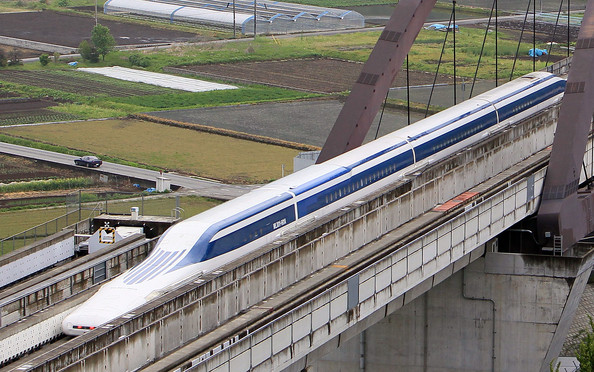
For a sense of just how fast this train goes watch the YouTube posted video. Built at a cost of $52 billion U.S. the first 24 kilometer (15 mile) test track is complete. The remainder of the line will require tunneling through the Japanese Alps and under the City of Tokyo’s many tall buildings.
It is expected that 248 kilometers (155 miles) of tunnels will have to be dug to ensure that the maglev rail lines run almost perfectly straight. That’s because maglev speed degrades if there are lots of curves.
One unique aspect of Japan’s new maglev train is that it won’t require government financing. Central Japan Railway Company intends to fund the project based on cash flow, loans and bonds.
For more information you can read the Bloomberg posting of August 29.
This week I have picked a whole bunch of new stories to share with you. The first describes how the State of Florida is fighting mosquitoes using drones. The second story is a follow up to NASA’s plans to capture a near-Earth asteroid with 12 candidates identified. The third is about Elon Musk who I call the 21st century Edison. He announced ideas for a pneumatic train called the Hyperloop while his rocket company, SpaceX, announced a successful firing of the Grasshopper with the rocket doing a controlled ascent followed by a lateral move and then a return to the launch pad. The fourth headline is about new materials that can make solar panels even cheaper. And finally, the last story features devices without batteries that draw power from ambient radio waves.
Florida to Use Drones to Eradicate Mosquitoes
Drones have become part of the arsenal in the war against terror and are somewhat controversial. But the Maveric drone (seen below), a product of Condor Aerial, is seen as a powerful helper in the war against the mosquito.It isn’t used to bomb the biting pests. Instead the Maveric is sent out on a search mission to find the pools of water where mosquito larvae thrive. It does this because it is equipped with a shortwave infrared camera that can relay information back to its operator. Then helicopters come in and drop a larvicide (either biological as in a fish that eat the larvae, or chemical) on the discovered sites. At some point Maverics may be equipped not just to search but also to destroy the mosquito breeding grounds. It’s only a matter of time.

12 Near-Earth Asteroids Identified as Candidates for Capture
If NASA and companies like Planetary Resources are serious about capturing or mining asteroids then the first step is to identify candidates. Of the nearly 9,000 known near-Earth asteroids (NEO) which are the ones deemed most suitable? A team of researchers at the University of Strathclyde in Glasgow, Scotland, have written a paper in which they have identified what they describe as 12 Easily Retrievable Objects or ERO asteroids.
By definition these 12 orbit around two Lagrangian points (L1 and L2), about one million kilometers (620,000 miles) from Earth (approximately 2.5 times the distance of the Moon). This means they can be reached by existing space technology whether robotic or human crewed. What we would do upon rendezvousing with any of these 12 depends on who is visiting.
Planetary Resources wants to mine suitable ones for rare minerals and for constructing a space infrastructure. NASA wants to capture one of them and bring it into Earth orbit where it can be more easily studied. In any case these 12 are the tip of the iceberg. There are probably a million NEOs yet to be discovered that are smaller and therefore harder to detect but advances in finding space objects should soon increase the inventory of ERO asteroids that qualify for study.

Elon Musk Keeps Inventing and Advancing
A modern day Edison, Elon Musk continues his efforts to make electric vehicles (EV) the choice of motorists, is building an EV infrastructure throughout North America, and is making Buck Rogers spaceflight in the near future a reality. And if that is not enough, in the last week he has shared his ideas for a high-speed transportation system using pneumatic tubes.
Musk’s idea is not original but neither were many of Edison’s. I have written about a pneumatic high-speed rail concept called the VacTrain in a previous posting. And a New York City inventor demonstrated a prototype in the post-Civil War era.
So what has Musk brought that is new to this concept? Besides the name, Hyperloop, Musk’s pneumatic train would be solar powered and would run on an elevated track encased in a tube resting on telescoping pylons (to deal with settling and earthquakes). The train in the form of many individual pods would travel a continuous loop between two fixed urban points. He proposes Los Angeles and San Francisco.
Each pod would include an electric compressor that would transfer air in front of the vehicle to the rear, creating a cushion upon which it would whisk passengers at speeds exceeding Mach 1. To keep the compressor operating on nominal power the pneumatic tube would be outfitted with linear electric motors approximately every 110 kilometers (70 miles) that would receive energy from solar arrays and battery storage. Read a detailed conceptual paper on the Hyperloop here.

And to make the week even more interesting Musk’s SpaceX showed off the latest test flight of the Grasshopper, a 10-storey, Falcon 9 reusable test rocket that has flown up 325 meters (approximately 1,066 feet) in the air on previous flights. In this latest launch on August 13, the Grasshopper not only flew 25o meters (820 feet) into the air but it also flew horizontally 100 meters (328 feet). Then it returned to its original launch point. The total flight lasted over a minute and with this test SpaceX demonstrated that it is one step closer to delivering a reusable launch vehicle. So kudos to Musk who continues to amaze.
New Material to Make Solar Panels Even Cheaper
A researcher at the University of New South Wales in Australia is lauding a cheap technology that can replace silicon based solar cells, dramatically improving performance and making the technology cost competitive with fossil fuel energy production. The material is a mineral called Perovskite. Currently an electrolytic material for use in solid oxide fuel cells, Perovskite has application in semiconductors. It exhibits permanent polarity within an electric field, a ferroelectric property that makes it highly attractive for use in electronics. And although you have probably never heard of it, the mineral is abundant and cheap.
Solar cells made with Perovskite can be much thinner than silicon-based product. The comparison, 1 micrometer for the former and 180 micrometers for the latter. Current protoypes have been built by spraying the Perovskite in a liquid medium on to a sheet of glass or metal foil. The resulting solar cells demonstrate 15% energy conversion efficiency. Researchers believe they can easily achieve 20 to 25% efficiency equaling the best performance of existing non-commercial lab-based solar technology. A commercial start up, Oxford Photovoltaics has raised $4.4 million U.S. to bring the technology to market.
A down side to Perovskite – the mineral contains a small quantity of lead (see picture below and its eerie resemblance to galena, the mineral form of lead). So like lead-acid batteries, Perovskite solar cells will have to come with some form of a material recycling program.

Mobile Devices Will Soon Be Powered Without Batteries
According to University of Washington engineers ambient backscatter from TV, radio and cellular transmissions presents a new energy source for smart devices with on board antennas attuned to various wavelengths. These devices with no battery will have many commercial applications including warehousing, assembly-line manufacturing, commercial retail and financial transactions. An array of smart sensors fully charged and operational would require no additional power other than what could be harvested out of thin air.
What this discovery means is the potential to construct smart buildings, roadways, bridges and homes, all containing embedded sensors that communicate their structural health continuously. Even devices with batteries could still operate if they contained this technology, leveraging the power from the backscatter.

Postscript
So that’s it for this week. Hope you found the range of subject matter interesting. Please come back for more and let me know if you have found an interesting story that we can research and talk about here at Techso Mogro.
– Len Rosen
]]>
Piezoelectricity is energy produced from pressure. The energy gets generated when an automobile, a truck or a train passes over a surface in which piezoelectric devices are embedded. Even a sidewalk or dance floor can be outfitted with such devices.
The cigarette lighter in an automobile is a good analogy for how piezoelectric devices work. In the case of the lighter a spring-loaded plunger is depressed producing high voltage to heat the embedded element.
Piezoelectric devices are embedded within existing infrastructure. As a result they can work day or night, in almost any climate and in any weather conditions. The energy these devices generate is in some sense serving to recover the energy expended by the vehicles that drive over them. With no footprint on the land like solar and wind, piezoelectric technology can include data collectors making roads smart to monitor and report on traffic conditions, vehicle type and weight, and vehicle velocity. And wherever piezoelectric devices are embedded they are practically impossible to damage or steal.
Innowattech Energy Harvesting Systems is an Israeli engineering firm that has developed the IPEG (TM), the Innowattech Piezo Electric Generator, a device that deforms from the weight of a person, vehicle, train or aircraft as they pass over. IPEGS can be installed in asphalt, concrete or composite material-surfaced roads. The company is working with the Italian government to install IPEGS in a highway running between Venice and Trieste to operate all road lighting.
How much energy can a device like an IPEG produce? A single kilometer (0.62 miles) of roadway with IPEGs installed can generate 400 kilowatts of energy based on average traffic conditions. The busier the road, the more energy it produces. Heavier vehicles means more energy gets generated.
On a personal level imagine owning a pair of shoes with soles that contain piezoelectric technology to power all of your mobile devices from phones to music players to flashlights with every step you take.

]]>
 Until about six months ago I had a model train set in my basement. We were renovating and I finally parted with my world of miniature locomotives and boxcars. They found a good home when we had a garage sale.
Trains have always fascinated me because they are such an expression of our technical society. Trains as a technical invention owe a debt to coal mining, and the steam engine. Tramways made of wooden rails were used to transport tubs of ore from mines to refineries in 16th century Europe. Funicular rail systems moved goods and people up and down hills and mountainsides. These early “railways” used human or animal power. But it was the transportation of coal as the primary fuel of the early Industrial Revolution in Europe that led to modern train transport.
The 19th century was the age of steam-driven railway technology. Nations built empires by laying track. North America saw transcontinental railway systems built both in the United States and Canada. Great Britain tied its global empire together by ship and rail, building railway networks in Asia and Africa to support colonial and commercial ambitions.
The 20th used a variety of sources of energy to drive rail transport from diesel to electric to the first MagLev trains. Rail design matured as steel rails replaced iron. Concrete rail beds replaced aggregate material and wooden cross ties making the “clackety-clack” sound of trains disappear. At the end of the 20th century high-speed passenger trains appeared in France, Germany, Japan and China.
Freight Trains in the 21st Century
In North America the latter part of the 20th century saw a general decline in the use of trains as trucks became the major transporter of goods and automobiles and highway infrastructure reduced passenger traffic. Yet in North America trains continue to represent the most sound economic and environmental method of moving bulk and manufactured goods across he continent.
Of all the transport industries discussed in these blogs, railways have traditionally been the greenest in terms of emissions and fossil fuel use. The first decade of the 21st century has seen new low emission diesel and hybrid locomotives introduced into freight railway transport networks further reducing the carbon footprint of the industry. The Evolution, a product of General Electric, is one of many new locomotives that have come to market since 2005. It features an air-to-air cooling system to burn fuel more cleanly and consumes far less fuel than locomotives with similar horsepower. General Electric is also introducing hybrid locomotive systems that capture energy from braking in a similar way to hybrid automobiles. The recovered energy is captured by an array of batteries and used to supplement power requirements. The amount of energy captured equals about 1500 kilowatt-hours or enough to light up 50 homes for a day.
Freight trains today are the land equivalent of super container ships traveling on land. They play a critical role in moving goods arriving from overseas to destinations inland or even to coastal locations on the other side of a continent. Container freight has replaced grain, coal, refined fossil fuel products and other bulk transported materials as the principal cargo of railways today. The technology used to track containers is technology that railways can deploy to track individual cars and their contents. Combined with GPS, railroad information systems can know at any time exactly where a container of goods that arrived in Long Beach, California, from China, is while on route to Kansas City, Missouri.
What other technologies are being deployed for freight railway systems?
Passenger Trains in the 21st Century
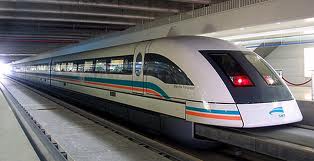
Train travel has been popular since the early 20th century and high-speed trains first appeared as early as 1933 in both Europe and the United States. These early trains reached peak speeds of 130 kilometres (80 miles) per hour. Just before World War II Italy introduced train travel between Milan and Florence with peak speeds of 203 kilometres (126 miles) per hour. In 1957 Japan introduced its first high-speed “Bullet” trains and by the mid-1960s provided rail service between Tokyo and Osaka operating at speeds of 217 kilometres (135 miles) per hour.
Conventional high-speed trains provide high-capacity transportation and minimal new investment in infrastructure making them very attractive. High-speed trains represent a better energy option than air, automobile and bus transit. What always made trains attractive to passengers, the ability to operate them with a very small footprint, and create connections from downtown to downtown, gives new impetus to developing high-speed train infrastructure.
High Speed Trains of the Future
The issues of speed, intelligence and safety characterize the passenger train industry as well. Let’s look at the technologies that 21st century passenger trains are incorporating and what is potentially doable before the end of the century.
The world became a lot smaller place as transportation technology evolved faster ways to get from one place to another. Human settlement patterns altered from being predominantly rural in the 19th century to urban in the 20th. By the mid-20th century cities spread out spawning underground and above-ground railway networks and road infrastructure that created the urban daily commute from home to work and back.
The automobile became a personal freedom machine for those who could afford it. And increasingly in North America and Europe, automobiles were economically feasible for much of the population. This expansion was supported by a network of energy suppliers providing a fuel infrastructure for gasoline and diesel.
By the end of the 20th century in North America the era of relatively cheap gasoline and diesel was coming to an end. In Europe gasoline and diesel was already prohibitively expensive in the last 20 years of the century but that didn’t stop Europeans from buying and driving cars.
In the last decade of the century developing world automobiles and the infrastructure to support them started to take off with China and India representing the fastest growing car markets. This increased demand for gasoline and diesel to fuel these new automobile consumers.
Western governments, in trying to reduce fossil fuel consumption, began legislating fuel efficiency standards for automobiles. In 1997 Toyota, Japan’s largest automobile producer launched the first hybrid vehicle using a combination of electric-battery-driven motors along with a gasoline internal combustion engine. Honda soon followed in 1999 with its own hybrid, the Insight. This combination of electric motor and gasoline internal combustion engine provided manufacturers with a way to improve fuel efficiency. For a short period, one manufacturer, General Motors, designed and delivered to a limited market an all-electric car. But this experiment was soon squashed.
But automobiles represented only one type of transport. At the beginning of the 20th century land transportation for industry relied on rail and marine shipping to acquire raw materials and deliver finished products to market. But by the end of the century rail played a smaller part for these same industries as trucks became predominant. Ships went through dramatic redesign as well growing ever larger, whether moving bulk raw materials or container systems largely spawned by the rise of the trucking industry.
Even more significant was the development of heavier-than-air flight capability. The airplane and the infrastructure to support it became one of the great achievements of the 20th century. Air travel contributed to a rising global view of the planet, reducing the amount of time required for travel dramatically.
For a short time in the 20th century balloons vied with airplanes but became novelties by the end while jet-engines became predominant with propeller-driven aircraft relegated to specialized markets from the mid-century to its end. As airframes increased in size, global distribution of goods through the air grew rapidly in volume supplanting rail and marine shipping. Air passenger transportation briefly went supersonic with the launch of the Concorde and TU-144. By 1978 the latter was no longer in service and the Concorde’s last flight occurred in the first decade of the 21st century.
In the 20th century humans travelled in to Earth orbit and to the moon using rocket technology first pioneered in the United States, perfected as a weapon of war in Germany, and then enhanced further after World War II as the Americans and Soviet Union developed the technology further for military and scientific pursuits. Rocketry remained the purview of national governments with the cost of the technology far exceeding the ability of most private enterprise.
What will make the 21st century different? The planet has grown very small in the 20th century and will be even smaller still in the 21st. Our concepts of transportation will take on three perspectives. At the urban level we will need to enhance and invent new means of mass transit. At the planet-wide level, globalization will drive innovation on land, sea and air. And in space, extra-planetary transportation will alter our frame of reference as a species and representative of all the life on Earth.
In subsequent blogs on transportation we will explore the following:
1. Urbanization and Population Growth and its Impact
Urban concentration of human population will change our transportation models. Toronto, Canada, where I live, provides a great example. Between 2001 and 2006, growing traffic congestion increased the average commute time by 16%. While Toronto increased road lanes by 56% between 1986 and 2006, public transit grew by only 18%. Almost one-third of Toronto workers commuted more than 15 kilometers each way to do their jobs in 2006. In the Greater Toronto area and suburbs average daily commutes were longer. Toronto is one of the worst examples of unplanned urban transportation impacting on quality of life. But Toronto is not unique as a North American city. So we will look at this subject in greater depth.
2. Energy Conservation as a Transportation Challenge
In other sections of this blog we have talked about energy and the significant challenge that energy consumption has for our technical society. Governments are legislating industry to innovate to reduce the amount of energy needed for transporting people and goods. Reliance on fossil fuels is increasingly impacting health and the environment. Reconciling our need for energy and modes of transportation is something that 21st century technology needs to address.
3. Environmental Pollution, Climate Change and Transportation
Humanity by necessity is being forced to reduce its carbon footprint. We have talked about geo-engineering the planet in another section of this blog. But in this coverage we will specifically look at the technologies we currently use to move materials, goods and people and their impact on the environment and climate. How will we continue to do business globally using transportation technology to move raw materials, agricultural produce, and manufactured goods half way across the planet while dealing with CO2 and other pollutants?
4. Employment Patterns
We are changing the way we work today. The Internet, software-as-a-service (what techies call the cloud), virtual business presence, the disassembling of our bricks and mortar ideas about what is a business, have undergone dramatic change in the first decade of the 21st century. How will that accelerate through the rest of the century. What will the impact of the electronic commute be on the automobile industry and other forms of personal transportation? What will it mean for logistics and supply management when companies go virtual?
5. Alternative Fuels
Electric cars, biofuels, hydrogen, solar power, ion propulsion, micro-nuclear, what will be the fuels that drive our transportation technology in the 21st century? Will we wean ourselves completely from fossil fuels?
6. Technical Innovation
Electronic roadways, chained automobiles, smart vehicle technology, robotics, high-speed maglev and pneumatic rail systems, radical new ship designs, hypersonic aircraft, ion propulsion, solar sails, space elevators….these are concepts on the drawing boards and in the labs and R&D centres of innovators and entrepreneurs today. What is promising and realizable in the 21st century? What will remain a dream?
Enjoy the journey with me and please remember to ask questions and comment. I always respond.
]]>


