The post Advances in Flight Technology Celebrated 25 Years After 9/11 appeared first on Techso Mogro.
]]>Flying commercial took on a whole new look after that, and this was well before the industry began paying attention to carbon footprints and new design efficiencies.
Aviation has undergone remarkable transformations over the past two decades, driven by innovations in materials science, aerodynamics, fuel alternatives, real-time data collection, environmental concerns and more.
Today’s aircraft bear little resemblance to those of even fifteen years ago, equipped with technologies designed to improve operational safety and efficiency. From cockpit automation to lightweight composite materials and structures, advances in aircraft engineering represent a cumulative effort to push the avionics boundaries.
Understanding these developments provides insight into how modern avionics continues to evolve and what operators and passengers can expect in the years ahead.
Modern aircraft rely on composite materials, providing significant advantages over traditional aluminum airframes. These materials combine carbon or glass fibre with resin matrices, providing greater strength while weighing substantially less than conventional alloys. Integrating these materials is fundamentally changing the industry, beginning with design and manufacturing, and throughout aircraft operational lives.
Composites reduce aircraft weight. One of the aircraft recently entering commercial use is the Boeing 787 Dreamliner, built using approximately 50% composite materials. By weight, composite materials are more expensive than aluminum. The advantages in using the former over the latter, however, are significant, because less weight means less jet fuel consumption. Jet fuel represents between 20 and 30% of airline operating costs in normal periods. Today, with the war in the Persian Gulf, that percentage is creeping upward and could reach 40 to 50%.
Consuming less jet fuel also translates into fewer greenhouse gas (GHG) emissions even though composite material production versus aluminum favours the latter over the former. As engineers continue to develop new composite formulations and manufacturing techniques to make these materials more affordable and easier to produce at scale, aluminum’s carbon footprint advantage should vanish.
Aerodynamic improvements represent a critical focus for manufacturers seeking to enhance fuel efficiency and performance. Computational fluid dynamics software now allows engineers to test thousands of design variations using digital twin technology before having to build physical prototypes. This is significantly accelerating the development cycle.
Winglet designs, sharklet additions, and optimized fuselage shapes are contributing to reduced drag and improving the lift characteristics of traditional wing and tube designs.
Airlines are retrofitting existing aircraft with aerodynamic enhancements such as split-scimitar winglets, reducing fuel consumption by several percent on long-haul flights.
Natural laminar flow is being enhanced by using specially designed surfaces that smooth airflow over wings and fuselage. These aerodynamic refinements are being made to new aircraft as well as being incorporated into existing fleets.
Cockpit technology has advanced dramatically with sophisticated automation systems that enhance safety and reduce pilot workload during complex flight operations.
Modern flight management systems integrate navigation, performance calculations, and autopilot functions into unified digital platforms to provide real-time decision support.
Cockpits replaced mechanical instruments with integrated digital displays several decades ago. Today, they continue to evolve using touchscreen interfaces and synthetic vision capability. System displays provide terrain awareness and warning information, weather radar imagery, and traffic collision avoidance data for pilots to easily interpret even when facing challenging conditions.
Fly-by-wire technology, which replaced mechanical control linkages with systems managed by computers, has proven a safety advantage for multiple aircraft types and as demonstrated over millions of flight hours.
The continuous refinement of digital control systems, combined with robust redundancies and pilot training, has made aviation statistically safer with each technological generation.
The industry is pursuing alternatives to today’s conventional jet fuel and modifying engine technology to burn them.
Why? Climate change is dictating a need for the industry to reduce its carbon footprint.
Alternative fuels being tested and perfected include sources like used cooking oil and agricultural waste. New synthesized fuels are being developed from CCUS (Carbon Capture Utilization and Storage) technology. Electric propulsion is another alternative, as is hybrid-electric propulsion. In the latter category, using compressed or liquid hydrogen supplemented by hydrogen fuel cells is among the candidates to replace conventional jet-fuel-powered aircraft.
Electric and hybrid-electric propulsion systems remain at an early stage, but already converted aircraft and wholly new designs are doing demonstration flights. Among the first was a converted de Havilland DHC-2 Beaver that in 2019 successfully flew a battery-powered version, the eBeaver, on a 70-kilometre (45-mile) point-to-point test flight. Since then, electric-powered aircraft have undergone flight demonstrations, some built by companies like Airbus, Rolls-Royce, Pratt & Whitney Canada, Honeywell, and GE Aerospace.
Burning hydrogen, either using compressed gas or liquid hydrogen, is also in the mix. Hydrogen fuel cells are also being tested. In 2023, H2FLY demonstrated a liquid hydrogen and hydrogen fuel cell-powered aircraft that flew 842 kilometres (over 450 nautical miles).
Before H2FLY got off the ground, Airbus was working with ElringKlinger, a German fuel-cell developer, on a hybrid-powered aircraft using a gas turbine engine and hydrogen fuel cells. The project began in 2021 but was eventually mothballed. Recently, Airbus announced it would begin in 2027 to work on a new hydrogen-powered 40- to 80-seat commercial aircraft powered using a hybrid hydrogen-based technology.
Using alternative fuels presents challenges for the industry that include retrofitting and redesigning engines to burn them. The ideal is not to have to make major design modifications or operational changes to demonstrate feasibility.
Other proposed changes to engine technology have included geared turbofan engines and open rotor designs. Some of these prototypes are demonstrating fuel consumption improvements exceeding 20% over current engines.
Today’s aircraft are supported by some of the most data-rich predictive analytics in modern engineering. Aircraft contain embedded sensors that continuously collect operational data, which is transmitted to ground-based systems for maintenance analysis. This predictive approach allows engineers to spot wear and tear failures days or weeks in advance, preventing costly and dangerous mid-flight incidents. Real-time reporting means proactive maintenance, a fundamental shift from fixed-interval servicing.
Artificial intelligence (AI) in the form of machine learning (ML) algorithms is increasingly being used to analyze patterns in all this data. The more data history, the more accurate the ML algorithms get.
Ground operations use layered positioning and surveillance aided by navigation systems, sensors, vehicle transponders, and other software to create real-time pictures of surface operations. This allows airport teams to reposition aircraft on the tarmac, relying on modern aircraft tugs to move jets safely and efficiently between gates and maintenance bays.
The post Advances in Flight Technology Celebrated 25 Years After 9/11 appeared first on Techso Mogro.
]]>The post Artificial Intelligence Tackles Freight Shipping and Transportation Logistics appeared first on Techso Mogro.
]]>Today’s posting looks at AI and shipping. What is happening to freight shipping specifically as AI-driven technology takes hold? AI and automation are redefining the management of assets and operations. Many reputable companies such as Redwood Logistics and Vesta Freight are experiencing an unprecedented technological paradigm shift.
By converting vast amounts of unstructured operational data into actionable, forward-focused insights, AI is transforming logistics from a static management model to one that enables real-time predictive optimization.
The traditional routing methods implemented in freight shipping always relied on historical baselines and fixed, linear paths that often couldn’t account for sudden, unexpected disruptions. Modern AI systems can adaptively evaluate a continuous stream of variables, including:
Machine Learning (ML) models run thousands of simulations concurrently and can adjust routes in real-time. Instead of relying on weekly dispatches, therefore, an AI-guided shipping container ship or cross-country fleet can avoid any potential transit bottlenecks before delaying its progress. This continuous recalibration greatly reduces compounding costs that happen when engines idle and arrivals are delayed.
AI’s predictive capability extends to the volatile realm of Estimated Times of Arrival (ETAs). Previously, logistical formulas were incapable of accounting for multi-port delays, often leaving ground distribution networks in the dark and wholly unprepared for cargo arrival. Today, AI systems can continuously analyze historical port performance alongside live telematics to deliver highly precise ETAs, enabling downstream partners to effortlessly synchronize labour and warehouse space. This consistent real-time recalibration makes shipping logistics far more reliable than in the past.
The logistics industry has struggled with the systematic financial drain that comes with less-than-truckload (LTT) shipments and empty backhauls. Those tasked with manual spatial coordination often find it extremely difficult to align disparate cargo profiles under tight delivery timelines.
With AI, however, volumetric and mathematical use of individual cargo spaces through automated load consolidation is maximized. Deep-learning models can analyze thousands of individual shipments and capture their:
The AI then instantly generates optimal spatial configurations for packing marine containers and dry vans to maximum capacity. This means fragmented cargo distributions can be automatically amalgamated into a single, highly organized freight dispatch. This maximizing of space reduces the total cost of ownership across mixed commercial fleets.
The physical infrastructure required to power freight logistics demands significant capital investment and regular upkeep. Historically, freight management relied almost entirely on calendar-based or mileage-informed maintenance schedules. This rigid approach often led to either premature, unnecessary servicing or sudden, catastrophic mechanical failures during vital, long-distance transits.
AI has mitigated this costly issue through proactive, condition-based predictive maintenance. Modern shipping assets include networks of Internet of Things (IoT) sensors that constantly monitor core mechanical indicators. These include:
Usage reduces the risk of unplanned downtime, extends the working lifecycle of your multi-million-dollar transportation hardware, and enhances metrics for highway and maritime safety.
The use of AI for freight shipping is having a significant impact on transportation logistics. ML models have improved accuracy and streamlined operations more than ever before, with up-to-date data processing mitigating many of the historical delays that container traffic management has historically experienced.
Optimized routing, including continuous micro-routing, is eliminating the downtime caused by unsynchronized arrivals at cargo ports. Precise ETAs are enabling warehousing partners to effortlessly synchronize their labour and warehouse space.
Maximizing spatial usage has substantially benefited freight operations, allowing companies to bypass the historical challenges of less-than-truckload (LTT) shipments and empty backhauls. Now, every container can be used to its maximum capacity without risking the integrity of the packages.
Proactive maintenance has extended the lifecycle of transportation assets, reducing unexpected downtime and improving safety during transit.
What’s next? The next wave of AI logistics support will involve increased autonomous operations and agentic AI for workflows. I suspect that logistics providers will adopt digital twin technologies that will add stress-testing simulations to further enhance performance and provide a global platform to orchestrate operations.
The post Artificial Intelligence Tackles Freight Shipping and Transportation Logistics appeared first on Techso Mogro.
]]>The post Energy Storage Plays a Critical Role in Today’s Transportation Systems appeared first on Techso Mogro.
]]>In this, her second posting, she writes about electrified transportation and the role of energy storage to ensure continuity of service.
As always, your comments are welcome here.
Transportation is in the middle of a structural transformation. Across rail, urban transit, and aviation, systems that once relied almost entirely on fossil fuels are being re–engineered around electrification. The shift promises lower emissions, quieter operation, and improved efficiency, but it also places unprecedented demands on energy storage.
Unlike consumer electronics, transportation systems cannot malfunction without consequences. Trains cannot stall mid–route. Buses cannot lose power in traffic. Aircraft cannot afford the uncertainty about available energy. In these environments, reliability is not a feature; rather, it is the foundation on which safety rests.
The challenge, then, is not necessarily about how much energy can be stored, but how predictably, safely, and transparently that energy can be delivered under real–world conditions.
In consumer technology, a depleted battery may be an inconvenience. In transportation systems, however, energy failure is expensive. Compromised propulsion, braking, signalling, communications, or onboard safety controls increase the risk of service disruptions, equipment damage, or even injury or death.
This elevated risk fundamentally changes how storage solutions need to be designed, tested, and maintained. Safety–critical systems must operate within narrow tolerances. Energy delivery must remain stable across fluctuating loads, temperature extremes, vibration, and long duty cycles. Sudden voltage drops, thermal runaway, or unpredictable degradation are unacceptable risks.
As a result, transportation energy storage systems are engineered conservatively. Designers often prioritize known behaviour and fault tolerance over cutting–edge performance. Innovation still happens, but it happens incrementally, with extensive validation under worst–case conditions.
These safety–driven design principles are clearly visible in high–speed rail networks across Asia, where energy storage is used not to extend range or autonomy, but to stabilize already electrified systems.
Japan’s Shinkansen system relies primarily on overhead power, but energy storage plays a crucial supporting role. When trains decelerate, regenerative braking captures excess energy that would otherwise be lost as heat. Wayside storage absorbs that energy and releases it when nearby trains accelerate, smoothing demand spikes and reducing stress on substations.
China’s high–speed rail network applies the same logic at a larger scale. Stationary battery systems near substations manage peak loads and provide short–term resilience during grid disturbances.
In both cases, storage functions as a buffer rather than a primary power source. Redundancy, isolation, and continuous monitoring ensure that a single failure does not propagate through the network.
Across all transportation modes, one core challenge dominates energy storage design: balancing energy density and safety.
Higher energy density enables longer range and greater flexibility, but it also increases thermal and chemical risks. In safety–critical systems, designers often accept lower energy density in exchange for clearer failure modes and better control.
Materials are chosen for stability rather than sheer power or capacity. Cooling systems, containment structures, and monitoring sensors add layers of protection but also increase weight and complexity.
These tradeoffs are intentional. In transportation, the cost of failure far outweighs the benefits of marginal efficiency gains.
Nowhere are energy storage challenges more visible (or more constrained) than in aviation.
As with other forms of transportation, aircraft battery systems are designed with strict limits on charge rates, temperature ranges, and discharge behaviour. But while buses and trains can more readily sacrifice efficiency and power for safety, airplanes require both a higher standard of safety and power to address higher speeds and altitude.
For example, electric and hybrid aircraft promise quieter operation and lower emissions, but current battery technology struggles to meet aviation’s energy density requirements. Even short–range electric aircraft operate with tight margins, where every kilogram of battery weight reduces payload or range.
As a result, electrified aviation is advancing cautiously. Most current deployments focus on training aircraft, urban air mobility, and short regional routes.
Transportation energy storage systems operate in environments that are rarely ideal. Heat, cold, moisture, dust, vibration, and mechanical shock all accelerate degradation and increase the risk of failure.
Designers address these realities through robust housings, shock isolation, thermal management, and conservative operating limits. Testing extends far beyond laboratory conditions, simulating years of real–world service before deployment.
These environmental demands help explain why safety–critical transportation relies on proven technologies and incremental improvements rather than rapid experimentation.
Nowhere are the effects of environmental stress more apparent than in urban transportation networks across North America and Europe, where electric buses, trams, and light rail systems operate under constant physical and operational strain across long distances and in different climates.
Urban vehicles face relentless vibration from uneven roads, frequent stop–and–go cycles, wide temperature swings, and near–continuous daily operation. Unlike long–haul systems that can tolerate downtime, city transit must perform reliably from early morning to late night, often with minimal margin for failure.
As a result, electric buses in cities such as London, Paris, Vancouver, and Los Angeles are engineered around known routes and known stress profiles. For example, operators rely on carefully managed charging strategies, like overnight depot charging supplemented by opportunity charging at route endpoints, to reduce battery weight while maintaining dependable service.
Modern safety–critical systems rely heavily on monitoring and diagnostics to manage energy storage risk. Sensors continuously track voltage, temperature, and load behaviour, feeding data into control systems that can intervene if anomalies appear.
This real–time visibility enables predictive maintenance. Instead of waiting for a failure, operators can identify gradual degradation and replace components proactively. This approach reduces unexpected downtime and enhances safety, but it also increases system complexity and data management requirements.
Diagnostics themselves must be reliable. False positives can cause unnecessary service interruptions, while false negatives can allow dangerous conditions to go undetected. Designing monitoring systems that strike the right balance is an ongoing challenge.
Energy storage in transportation systems is subject to extensive regulation. Certification authorities require detailed documentation covering design assumptions, testing protocols, failure modes, and maintenance procedures. Compliance is not optional and often determines whether a system can be deployed at all.
Regulatory frameworks evolve slowly, which can create tension with rapidly advancing storage technologies. Manufacturers must demonstrate that new solutions meet existing safety standards, even when those standards were written for older designs.
This oversight adds cost and time to development, but it also provides a critical safety net. Thorough certification processes ensure that storage systems entering service have been evaluated rigorously, reducing systemic risk across transportation networks.
The challenges faced by safety–critical transportation systems offer valuable lessons for broader energy storage use.
Advances will likely focus on smarter management, improved materials stability, and better integration between storage and control systems rather than dramatic leaps in capacity alone. Systems designed with these principles will tend to last longer, fail less often, and inspire greater trust.
The post Energy Storage Plays a Critical Role in Today’s Transportation Systems appeared first on Techso Mogro.
]]>The post NASA’s SR-1 Freedom is a Nuclear Mission Bound for Mars in 2028 appeared first on Techso Mogro.
]]>What’s driving NASA to revisit the nuclear option? Likely, it is the renewed space race with Russia recently announcing plans to deploy a nuclear rocket option and China continuing to make progress with its space program. With either of these two space rivals, NASA does not want to be playing from behind. It already did that in the 1960s before the Apollo Program vaulted past the Soviet Union to achieve the Moon landing in 1969.
NASA’s history with nuclear power for spacecraft has involved using RTGs and other thermoelectric nuclear power sources. RTGs use radioactive plutonium-238’s natural decay to generate thermoelectric power. The technology has been perfected over time, and it has proven to be very reliable.
Today, RTGs continue to power the two Voyager spacecraft that have long left the Solar System after touring the Ice Giants of the Outer Solar System. RTGs powered the two Viking spacecraft that landed on Mars in 1976. These systems provided power for Galileo as it circled Jupiter, and Cassini during its multi-year mission to the Saturnian system. New Horizons, the spacecraft that visited Pluto and continues to explore the Kuiper belt, is powered by an RTG. Today, two RTG power plants keep Curiosity and Perseverance going on the Martian surface.
RTG technology, however, is not suitable to power a rocket. For that, NASA has looked to alternative technologies starting in the 1960s, up until now.
The 1960s saw NASA and the Atomic Energy Commission launch a project they called NERVA, a nuclear-thermal-propulsion (NTP) rocket using a solid-core fission reactor to heat hydrogen gas and expel at high speed through a nozzle. The project was cancelled not because it wouldn’t work, but rather because of budgetary concerns.
Its replacement, more recently, has been called DRACO, a demonstration nuclear rocket technology. DRACO also uses a fission reactor and hydrogen fuel. Until recently, it was the technology NASA intended for its first nuclear rocket. Now the project has been mothballed.
The new nuclear-powered rocket is called the SR-1 Freedom, with a mission plan to go to Mars. The SR-1 mission will carry the Skyfall payload to Mars. The Skyfall capsule will descend to the Martian surface by parachute and deploy three helicopters, built as successors to Ingenuity, the helicopter that accompanied the Perseverance rover and flew 72 missions for almost three years before rotor damage grounded it.
NASA describes the SR-1 as a nuclear-powered interplanetary tugboat. To meet a 2028 launch date, NASA intends to use the already-built Power and Propulsion Element (PPE) that was to be used by the now-defunct Lunar Gateway and modify it to integrate a 20+ KiloWatt nuclear fission reactor. Lunar Gateway was to be powered by solar panels. Repurposed for the SR-1, the reactor will generate electricity to power xenon plasma ion thrusters to provide thrust.
Where NERVA and DRACO converted power from their fission reactors to directly superheat hydrogen gas and expel it to achieve thrust, SR-1 will use a more indirect approach with the reactor generating electricity to feed ion thrusters, in other words, a NEP, a nuclear-electric propulsion system.
The timelines are tight. The Mars launch window is to have SR-1 ready for December 2028. Besides assembling the SR-1, which will involve the nuclear reactor, a power conversion system and the ion thrusters, the U.S. Department of Energy will have to provide nuclear certification.
SR-1 will take a year to get to Mars. So, this is not a high-speed option to be used by crewed missions to Mars in the future. Besides the increased mass and the need for shielding to protect the crew from cosmic rays, a variant of the SR-1 could be used. For example, a 100 to 500 KiloWatt fission reactor paired with a larger power conversion system and more ion thrusters could shorten transit times to 3 to 4 months. A successor to the SR-1 could include return propulsion systems to ensure a margin of safety for its crew.
What the SR-1 Freedom mission will do is be a proof of concept that should quickly render chemical rockets for long-duration missions beyond the Moon obsolete.
Is it possible to see fusion-powered rockets in the next 30 years? Controlled fusion here on Earth is still going through birth pains. A commercial fusion reactor will likely be a reality within the next ten years. A direct fusion drive to power a rocket is another matter.
Why go there? Because nuclear fusion in space is far easier than doing it here on Earth, and because nuclear fusion engines would need only tiny amounts of fuel to generate the thrust needed to shorten a mission to Mars to 1 or 2 months, and to Pluto in less than 4 years. Fusion would be the king of propulsion technologies.
The post NASA’s SR-1 Freedom is a Nuclear Mission Bound for Mars in 2028 appeared first on Techso Mogro.
]]>The post Passive Cooling Technologies In Current EVs Are Extending Driving Range While Keeping Passengers Comfortable appeared first on Techso Mogro.
]]>EV batteries must supply power to both the drivetrain and the auxiliary systems. Traditional internal combustion engines (ICE) generate excess heat that can be repurposed to warm a cabin. ICE vehicles use mechanical engine power to run air conditioning compressors. Conversely, EVs operate with remarkable thermal efficiency and rely entirely on electrical power from the main battery pack for all climate control. This means cooling or heating the cabin requires dedicated power, which directly impacts driving range.
This impact on driving distance is not merely theoretical but highly measurable. As highlighted in an extensive range test by Car and Driver, running climate control in an EV can dramatically reduce driving range, sometimes consuming up to 35% more energy than driving with the HVAC system turned off.
To counter this dramatic drop in efficiency, energy conservation at the structural level is paramount. Preventing the cabin from overheating in the first place reduces the subsequent burden on the climate control system. When a vehicle is parked in direct sunlight, the glass windows create a greenhouse effect, trapping solar radiation and causing interior temperatures to skyrocket above the ambient outside air.
Simple thermal barriers, such as sun shades for car windows, are highly effective, zero-emission methods to block solar radiation before it penetrates the glass. By lowering the initial interior temperature of a parked vehicle, air conditioning systems require significantly less energy to achieve a comfortable baseline. This proactive approach allows drivers to conserve battery capacity for actual mileage.
The automotive industry is well aware of the limitations surrounding current lithium-ion batteries, with significant research going into eliminating range anxiety. As detailed in the publisher’s coverage of future transportation, innovations in solid-state and lithium-metal architectures promise to deliver longer ranges and much faster charging times.
These cutting-edge batteries, however, are only now becoming available for the mass market. Solid-state batteries will become the new gold standard, but until they become commonplace, drivers and manufacturers will continue to rely on intelligent energy management to get the most out of existing EVs. That’s where passive cooling strategies will serve us well as a vital bridge in this transitional period.
Beyond fundamental accessories, automotive engineers are integrating passive thermal management directly into the architecture of EVs. These design choices aim to reflect, absorb, or dissipate solar energy before it triggers a need for active mechanical cooling.
Current and experimental passive cooling integrations include:
The future of personal transportation relies heavily on the ability to optimize the use of every joule of stored energy. While the allure of revolutionary battery chemistry dominates automotive headlines, immediate practicalities and the need for climate control cannot be ignored. The simple act of reducing thermal loads through both integrated engineering and basic passive accessories demonstrates a holistic approach to vehicle efficiency. This integrated mindset ensures that energy conservation remains a priority even as battery capacities expand over time. By keeping the interior of EV cabins cooler while not relying on the vehicle’s HVAC, drivers can ensure battery power is reserved for its primary purpose, driving progress forward efficiently and sustainably.
The post Passive Cooling Technologies In Current EVs Are Extending Driving Range While Keeping Passengers Comfortable appeared first on Techso Mogro.
]]>The post The Latest Electric Battery Breakthroughs appeared first on Techso Mogro.
]]>
At this year’s CES, Donut Lab, an Estonian-Finnish company, revealed WattEV, a new solid-state battery platform with integrated in-wheel motors that is available to EV manufacturers. The battery, states Donut, uses abundant materials, charges in five minutes, is cheaper than existing lithium-ion battery packs, can handle up to 100,000 discharge-recharge cycles, and retains 99% capacity in temperatures ranging from -30°C (-22°F) to 100°C (212°F) with no signs of degradation or ignition. It is hard to ignore what this signifies in terms of breaking several performance thresholds.
A motorcycle version is featured on the Verge TS Ultra, a futuristic bike with a driving range of up to 600 kilometres (over 370 miles), 200 Kilowatt charging speed and a 10-minute to 80% fast recharge. The bike’s in-wheel motor is mounted in the rear and requires few moving parts. Software upgrades are sent wirelessly to keep the bike operationally state-of-the-art.
For motorbike aficionados, this bike is being described by Verge and some preliminary reviewers as a game-changer superbike.
Sticker price sits at around USD $45,000.
Because my son-in-law is a columnist who writes about motorcycle technology innovation, I asked him for a comment about the Donut Lab wheel motor and battery pack and the new Verge bike. He stated, “It all sounds too good to be true,” which makes me suggest that, until independent peer-reviewed third-party testing results are published, view this breakthrough battery and EV platform with a grain of salt.
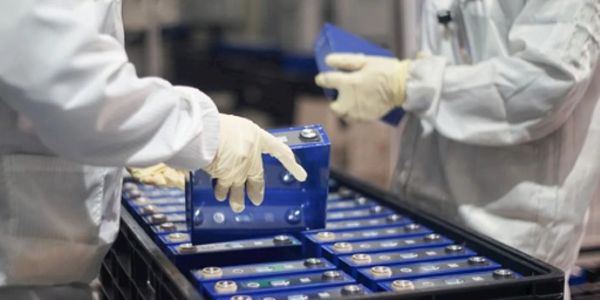
A South Korean team from POSTECH, KAIST, and Gyeongsang National University have developed an anode-free lithium-metal battery featured in the December 2025 journal Advanced Materials. The battery delivers nearly double the driving range using the same battery volume, 1,270 WattHours per litre versus 650 Wh/L found in typical lithium EV battery packs today.
Anode-free lithium metal batteries eliminate the need for a conventional cathode, reducing raw material requirements and allowing for more energy to be stored within the same volume. To ensure no dendrites form, a common risk in lithium-ion battery technology and something I recently experienced when my smartphone overheated and cracked through its casing, the battery uses distributed silver nanoparticles to ensure uniform lithium deposition. In testing, the battery retained 81.9% of its initial capacity after 100 cycles and 99.6% efficiency.
For commercially available solvent-based batteries, if adopted, this improvement could keep lithium-ion in the mix for EV platforms in competition with solid-state metal battery packs.

China’s BYD is the EV manufacturer that has supplanted Tesla as the industry leader. Recently, the company announced a 2nd-generation Blade 2.0 Battery with FlashPass high-speed charging.
FlashPass is a high-capacity 1.5 megawatt charging system that makes it possible to charge a battery from 10 to 70% in 5 minutes and to 97% in 9. Even in sub-zero temperatures, Blade 2.0 with FlashPass can go from 20 to 97% charged in 12 minutes.
This new FlashPass charger is almost 50% faster than previous BYD fast charging systems that the company is currently rolling out across China. By the end of this year, BYD will have installed more than 20,000 fast charging systems across the country.
The Blade 2.0 Battery will power BYD’s new Yangwang U7 luxury full-size sedan, giving it an optimal range (laboratory testing) of more than 1,000 kilometres (620 miles). More conservative testing suggests Blade 2.0 will manage approximately 70% of the distance per charge, which is no mean feat, making the internal combustion engine vehicle seem even more passé.
Blade 2.0 is a lithium-metal battery that uses iron phosphate. Iron phosphate is a cheaper material than cobalt or nickel used in other lithium-metal battery packs. It has, in the past, been considered a more range performance-limited lithium-metal battery than those using nickel and cobalt. So what has changed? It is the 1.5 megawatt FlashPass charger that has made iron-based batteries compete.
The post The Latest Electric Battery Breakthroughs appeared first on Techso Mogro.
]]>The post Using Roadways To Generate Power Versus A Fast Charge Network appeared first on Techso Mogro.
]]>Electreon, an Israel-based developer of wireless electric road systems, is the technology provider. The use of an electrified inductive track buried beneath the roadway means electric vehicles (EVs) can use smaller battery packs and be lighter in weight. Lighter means less road wear and lower maintenance costs for both vehicle operators and infrastructure providers.
Electreon states that its mission is to support “100% global electrification” for the transportation sector, and induction is its chosen methodology for the electrified section of this highly travelled A10 highway. For the initial test, EV heavy-duty trucks, like the ones seen in the image above, were outfitted with receivers to recharge as they drove. The data indicate excellent results.
If France proceeds with its Electric Road System (ERS), it will cover 9,000 kilometres (approximately 5,600 miles) by 2035.
France isn’t the first to consider electrified road systems. Back in 2021, I described a Swedish pilot project, an ERS that used a conductive metal rail near the side of the road to send electricity to EVs with receivers. The test area was a small section of highway outside of Stockholm.
Older still are catenary systems that use overhead wires to power electrified transportation. We are talking about electric trains, trams and streetcars, the primary means for mass transit in the 20th century. Overhead attachments make contact with power lines to drive the vehicles with these catenary systems found in cities around the world. They work because of the unrestricted overhead space that makes the technology relatively inexpensive to build, operate, and maintain. Third-rail systems have also been around throughout the 20th century, running in subways and on elevated rapid transit, like the Chicago L.
In the future, we may see kinetic energy roadway systems that derive power from piezoelectric devices embedded in roadways. At the Rutgers Center for Advanced Infrastructure and Transportation, implanted devices capture energy from the vibrations and weight of traffic on roads. Harvesting this mechanical energy from highly-travelled roadways may not equal the power derived from inductive or conductive electric road systems, but it should be more than enough to power roadway lighting, traffic signage and signals, and melt ice and snow.
Solar Roadways, an Idaho-based company, has been experimenting with integrating solar energy into road infrastructure. Its system uses harvested energy to provide charging, illumination, and road heating powered by sunlight.
All of these roadway-based energy-generating systems represent alternatives to powering EVs with rechargeable battery packs and rechargers.
Does the cost of electrifying a road network come out at more or less than the buildout of a public high-speed recharge network?
Electrifying a roadway can be expensive. For example, the estimated cost of inductive or conductive systems per kilometre comes to between US$1 and $7 million ($1.7 and $11 million per mile).
That’s a low ball when you consider this case example.
A 1.2-kilometre (0.75-mile) section of electrified roadway in the State of Florida ended up costing $500 million when all the power upgrades, cabling, and other supporting infrastructure costs got added in.
Now, compare the above to the cost of recharger units. How many public recharge units would be needed to support the growing number of EVs on the roads? Here are some basic recharger facts:
Consider the U.S. Interstate Highway System. Here are some interesting statistics:
Could a dedicated electrified lane for Interstate long-haul trucks on high-travelled routes be cost and environmentally sustainable? Would it be more cost-effective than building out a network of Level 3, ultrafast and Super e-Platform chargers? The accountants and policymakers in the 21st century have their work cut out for them as they consider the infrastructure needs to support future EV volumes and the economics of electrified roadways versus charge stations, or a combination of the two.
The post Using Roadways To Generate Power Versus A Fast Charge Network appeared first on Techso Mogro.
]]>The post The Latest Battery Business: Modular, Solid State, And New Electrodes appeared first on Techso Mogro.
]]>In the latest news, Dutch students have developed detachable modular batteries to go with their new city EV. IDTechEx reports on the rapid progress in the development of solid-state batteries (SSBs), and a British university reinvents the silicon electrode.

Leave it to students to come up with an EV called ARIA, a modular city car with standardized parts, and a readable user manual that is less than encyclopedic and designed for home repair aficionados. The students hail from Eindhoven and Fontys Universities, and Summa College in the Netherlands.
ARIA design features include interchangeable modules rather than black box components found in brand EVs. Instead of a single large integrated and often inaccessible battery pack, ARIA uses six 12-kilogram (26-pound) easily removed battery modules that can be replaced by hand. Each body panel and the interior electronics are easily removed, repaired or replaced. ARIA comes with its own toolbox and an app for diagnostics, and information for doing maintenance and step-by-step home repair.
ARIA was built to meet the aspirations of the European Union when it passed the 2024 right to repair legislation for consumer electronics to make post-warranty maintenance easier and cheaper, including applying these regulations to EVs.

The developments happening in SSBs, states Dr. Xiaoxi He, an energy storage expert from IDTechEx, are rapidly transforming the future of battery technology, providing breakthroughs in energy density and safety. IDTechEx’s latest report, Solid-State Batteries 2026-2036: Technology, Forecasts, Players, projects that SSB sales are expected to grow to US$10 billion by 2035.
Leadership in SSB technology appears to be coming from non-North American vehicle manufacturers. This year, Mercedes‑Benz EQS introduced an EV with a lithium‑metal battery capable of travelling over 1,200 kilometres on a single charge. Volkswagen has showcased an SSB for a Ducati motorcycle, while BMW recently began road-testing a sulphide SSB for its i7 model.
Polymer-based SSBs are already in use by Blue Solutions’ Bluebuses in Europe, Bluecar car‑sharing fleets, and Daimler’s eCitaro models.
Keeping pace are Asian producers, including Panasonic, Nissan and Yokohama in Japan and Chinese manufacturers who have introduced NIO’s 150‑kWh semi‑solid pack, and SAIC’s MG4 batteries for commercial EV models. Another semi-solid battery is being used by Forland for a new truck model. The development of semi‑solid batteries is seen as a safer battery than the current leading Li-ion liquid technology. Meanwhile, Chinese manufacturers are working to develop ceramic‑based all‑solid‑state batteries (ASSBs).
Why the interest in SSBs? This battery technology is a logical replacement for inflammable organic liquid electrolytes used today in Li-ion technology. Solid-state electrolytes (SSE) can be paired with silicon and lithium metal anodes and high-voltage cathodes to produce higher energy density. Unlike liquid Li-ion battery packs, SSBs can be designed with smaller form factors and then linked together to create flexible pack designs for different types of vehicles and applications.
Beyond EV applications, the market for SSBs can expand to large-scale applications such as grid energy storage, or smaller deployment in medical equipment, including wearables, drones, electric aviation and eVTOLs, and in robots.

Research at Queen Mary University in London, UK, has produced a double-layer silicon-based composite electrode that provides fast-charging for EVs at lower costs by between 20 and 30%. The research was recently published in the journal Nature Nanotechnology. Silicon electrodes have ten times higher theoretical capacity and faster charging speeds than current commercial electrodes. The problem with silicon in the past was fewer charge/discharge cycles and rapid degradation.
This new design has the potential to be commercialized as a double-layer graphite-silicon composite electrode exhibiting lower polarization and capacity decay when compared with what is currently available today.
For the latest in battery and other 21st-century technology and scientific breakthroughs, please consider regular visits or subscribing to this blog site.
The post The Latest Battery Business: Modular, Solid State, And New Electrodes appeared first on Techso Mogro.
]]>The post Novel 3D Printing And Circular Economic Processes Are Key Differentiators For Europe’s Airbus appeared first on Techso Mogro.
]]>In this posting, she writes about Airbus, the aerospace rival to Boeing, and its use of 3D printing, material reuse and other circular economic principles to manufacture its aircraft. Take it away, Tarina.
Airbus is the largest aeronautics and space company in Europe. With more than 180 sites worldwide and boasting over five decades of aerospace expertise, it is utilizing a new 3D printing technology to set sustainability standards. Airbus is embracing circular processes to optimize its resource use and minimize waste when it comes to metals, many of which are infinitely recyclable and retain their quality throughout their lifespan.
To achieve Airbus’ sustainability goals, it has focused on two critical metals, aluminum and titanium, working with raw material suppliers, component manufacturers, recycling specialists, and others within the aeronautical industry. It is also applying circular economic principles to its manufacturing processes. These efforts represent a strong commitment to battling global warming and waste.

Aluminum and titanium are used widely in the manufacturing of aircraft.
Titanium, on average, makes up 14% of the material found in every Airbus aircraft. Various grades of the metal are used for a wide variety of components. The most common is Grade 5 titanium alloy, which provides high strength, light weight, good corrosion resistance, and weldability. Lower grades, such as 2, 3, and 4, are also used for their strength and anti-corrosive qualities. Other alloy grades, such as 9, are used for tubing, hydraulics, and landing gear components.
Aluminum alloys account for even more in aircraft production, comprising 20% of the total. Alloys are grouped in the following categories: 2xxx, 6xxx, and 7xxx.
The high use of titanium and aluminum in Airbus aircraft has been the focus of the company as it seeks innovative ways to reduce these metals’ carbon footprint. Airbus has crafted a goal embracing “Ten Rs,” which expands on the idea of the reuse, reduce, and recycle philosophy.
The Ten Rs include:
3D printing is not new to manufacturers. Airbus is using two specific types of 3D printing technologies called Additive Layer Manufacturing (ALM) to build aircraft parts out of titanium, with minimal waste. Instead of creating parts using larger amounts of material and milling them down, producing excess scrap, ALM provides precision manufacturing using only the precise amount of material needed.
The first of these 3D technologies is Powder Bed Fusion (PBF) uses laser beams to melt powdered titanium into a desired shape. This technology can be used to create layers as thin as 0.1 millimetres. A good example of how PBF gets used is in the creation of the 32 door latch shafts required for each A350 aircraft. Before PBF, latch shafts were made from ten different parts that then had to be assembled. The PBF replacement is a single integrated part that weighs 45% less than its predecessor. Considering weight is critical in any aircraft, this one change saves up to 126,000 kilograms of CO2 emissions from less fuel being used over a 20-year average aircraft lifespan.
The second 3D printing technology is Directed-Energy Deposition (DED), which involves creating large parts by using a laser to melt titanium wire and then depositing it in place to create a semi-finished “near net shape” part that needs further machining before installation. With DED, teams can forge parts faster and relieve pressure on titanium supply chains.
Why is reusing and repurposing aluminum used in airframe manufacturing so important? Recycled aluminum requires only 5% of the energy needed for primary production.
That’s why Airbus is working with two aluminum suppliers, Constellium and Novelis, to create a closed-loop recycling process for aluminum scrap. The project has involved onboarding machinists who produce aluminum scrap, as well as scrap dealers and melters.
A subsidiary of Airbus called Tarmac Aerosave is partnering with Constellium to recycle fuselages into new aluminum alloys that can be used in future aerospace applications.
In an industry often defined by precision, speed, and scale, it’s refreshing to see a company like Airbus slowing down to ask the bigger questions, about how things are made, where materials come from, and what happens to them when their job is done.
By weaving sustainability into the very fabric of its design and production processes, Airbus is showing that cutting-edge technology doesn’t have to come at the planet’s expense. Whether it’s reimagining aircraft parts through 3D printing or giving aluminum scrap a second life, the truth is, airplanes are better, but what’s even more powerful is the mindset that is creating them, one that embraces circular thinking with the potential to spark change far beyond the aviation industry.
The post Novel 3D Printing And Circular Economic Processes Are Key Differentiators For Europe’s Airbus appeared first on Techso Mogro.
]]>The post How To Navigate In The Absence of GPS: Introducing SiPhOG and ANELLO Photonics appeared first on Techso Mogro.
]]>I talked about several episodes of the popular network comedy, “The Big Bang,” where the Caltech friends work on a gyroscope using quantum states and dynamics for navigation. When they apply for a patent, the U.S. Department of Defence comes calling.
Mario laughed and said that one of his clients had told him about it. Although SiPhOG is not using quantum states for positioning, it is achieving the same purpose, providing highly accurate navigation. SiPhOG stands for Silicon Photonic Optical Gyroscope. When this tiny sensor is put into a system, it can work to complement current global positioning system (GPS) technology or operate as a standalone solution, filling the navigation gap.
Today, GPS provides navigation assistance worldwide using a constellation of satellites and ground stations. Conceived by the U.S. Department of Defense in 1973 and fully operational by 1993, GPS uses 31 satellites, each containing an atomic clock and a transmitter that communicates with ground stations and receivers. The ground stations monitor the health of the system, correct for drift, atmospheric signal delays and changes to the satellites’ orbits.
Cars, ships, aircraft and smartphones, today, have GPS receivers to determine their locations within 30 to 500 centimetres (0.98 to 16 feet) if military grade or 7 metres (23 feet) for civilian use. Positioning requires at least four of the 31 satellites. They produce a 3-dimensional reading for the receiver’s location and determine latitude, longitude and altitude.
GPS has replaced paper maps and route planners. Its success has led Russia to copy it with GLONASS, the European Union with Galileo, China with BeiDou, India with NavIC, and Japan with QZSS. But satellite-based navigational aids don’t work everywhere. Why not? Satellite-based navigation requires a direct line of sight to the open sky. When is that not possible? It is hard to find open sky in cities with tall buildings. GPS won’t work inside buildings and underground garages, or tunnels. It cannot find hikers in dense canopied forests. Nor can it track a robot tractor spraying insecticides as it rides through a leafy orchard. Forget trying to use GPS on submarines and submersibles underwater.
This is where SiPhOG excels. Mario calls it the first new gyroscope technology to come on the market in the last two decades. Its uses include the military, aerospace, land and sea vehicles, robots, drones and more.

A single SiPhOG product is less than 25 millimetres square (see the picture at the top of this article). The integrated photonic chip inside the SiPhOG is no more than 2 by 5 millimetres (0.0155 square inches). It has low energy requirements, a mere 850 milliwatts, nearly one-tenth the power requirement of older optical gyroscopes like FOGs (fibre optic gyroscopes).
Its bias is 0.5 degrees per hour. It can be boxed in devices combined with accelerometers and other sensors, as well as AI algorithms and sensor fusion (the process of combining data from multiple sensors to produce a more reliable and accurate understanding of the environment) for enhanced navigation solutions and applications. When used in a navigation system for real-time positioning, it achieves 99.9% accurate navigation in tests involving distances of 100 kilometres (approximately 62 miles) for land vehicles.
Older optical gyroscopes like FOGs (fibre optic gyroscopes) cannot be used for mass market solutions because of their size, energy demands, complexity and cost. MEMS (micro electromechanical systems, while small and low power, cannot be used for accurate navigation because the technology is less accurate and very sensitive to temperature, vibration and EMI (electrical mechanical interference).
Mario spent 22 years at Intel before founding ANELLO. His area of expertise is silicon photonics, which he brought to the company. He and his team took four years to build the first SiPhOG. How does it work? Within the tiny photonic chip, it takes in a broadband laser source and splits it into two beams. The two beams are then sent into a coil, where they propagate in different directions. As the coil rotates, the light travelling in the same direction as the rotation experiences a slightly shorter path than the light travelling the opposite way. This tiny phase shift is measured using an integrated photodetector and a specially designed low-noise electronics detection system. By measuring the phase shift and knowing the length and diameter of the coil, one can calculate the rotation rate or bias drift. With no moving parts and being insensitive to temperature shifts, vibrations, and electromagnetic interference, SiPhOG produces precise inertial navigation that delivers accuracy and reliability with or without GPS present.
The ANELLO AI-powered sensor fusion engine continuously evaluates GPS signals in real time, and when that signal degrades, an algorithm shifts navigation reliance to the SiPhOG. If a drone relying on GPS gets jammed or spoofed, with SiPhOG onboard, it can automatically switch to its inertial navigation with complete awareness of its surroundings. Needless to say, SiPhOG is truly a disruptive technology which should have an enormous impact for many different uses.
Mario shared with me several use cases for ANELLO SiPhOG-based technology:
As I spoke to Mario, I was thinking about how SiPhOG could revolutionize how the blind navigate. I had written a 2014 posting describing a smartphone navigation system that blind people could use in buildings. It seemed novel at the time, but was far more complex than what I can see Mario’s technology doing to create “a blind navigation system app,” running on a smartphone or smartwatch.
Who knows, maybe in mentioning this, and with future integration making SiPhOG even smaller, ANELLO will create an application for this amazing technology that could give the blind second sight, not visionary, but an ability to navigate the world without seeing eyes, just as they are doing today without GPS.
The post How To Navigate In The Absence of GPS: Introducing SiPhOG and ANELLO Photonics appeared first on Techso Mogro.
]]>