Genetics is a fundamental part of our understanding of who we are as a species. Genetic variation, however, causes changes we call mutations that subsequently affect future generations. Good, bad, or ugly, mutations play a critical role in our evolution. Some genetic mutations negatively impact our health. Some affect how we process nutrition.
Genetics isn’t the lone player in our life health experience. Epigenetics has a role to play as well. Current research is uncovering nutrition-affecting mutations that play a greater role in our health, and how what we eat, where we live, and other environmental factors can play a role in altering gene expression and becoming the heritable triggering factor of mutations seen in following generations.
Genetic mutations are not uncommon. Hundreds of genetic mutations cause a variety of effects, some well-known, others not so much. Often, people associate genetic mutations with cancers and other rare diseases, but mutations are responsible for many other conditions and observed traits. Not all are welcome. This is particularly true when it comes to nutrition and gut health. Genetic mutations are responsible for so many of the nutritional issues that a substantial portion of humans face.
From a nutrition perspective, a mutation that impacts nutrient intake can lead to a complete and total lifestyle change. For instance, there are a variety of mutations that impede the body from processing proteins we ingest. Lacking the ability to absorb proteins can impact proper growth and function. A chronic lack of protein can lead to limited muscle mass, muscle weakness, low blood pressure and heart rates, and slow recovery from injuries.
Another common genetic factor so many face is related to nutrition and cholesterol. High cholesterol runs in families. It can lead to a greater likelihood of a heart attack or stroke at a young age. You can try to manage high cholesterol through lifestyle changes such as eating a low-fat diet, doing more cardio exercise, and managing your weight. Advances in DNA editing, however, may start to change the way we deal with cholesterol.
Cholesterol comes in two forms: HDL and LDL. HDL stands for high-density-density lipoproteins. LDL stands for low-density lipoproteins. When you have a blood test to check your cholesterol levels, each type is measured. Think of HDL as the good, and LDL as the bad. High HDL levels protect us from heart attacks and strokes. High LDL levels lead to the narrowing of arteries and increase the risk of heart attacks and strokes. High LDL cholesterol levels are linked to obesity which may have genetic roots. For patients with obesity, however, modifying their lifestyles can introduce epigenetics into the health equation.
What is epigenetics? It is the story of cause and effect, that modifying behaviours or changes to your environment can impact.
Epigenetics studies how behaviour and changes in the environment impact how genes work. It is proving to be an important addition to our study of our health and the role genetics plays. Epigenetic profiles, today, are being used to not only predict disease risk but also how long we will live. An epigenetic lifespan predictor called DNAm GrimAge is an epigenetic clock that can accurately predict how long we will live, barring accidents, from testing umbilical cord blood taken from a newborn.
How epigenetics impacts obesity looks at the influences of environment and lifestyle including what you eat and how that alters gene expression. Essentially, the genes in your body take regulatory cues from the environment in which you live. How they do so is heritable. That means your genetic makeup can be inhibited or activated by environmental factors.
When it comes to obesity, your diet and gut microbiota, together with environmental factors such as where you live and how sedentary you are, influence the expression of certain genes. In turn, this influence contributes to things such as cholesterol levels and how susceptible you are to various diseases.
Like genes, epigenetic mechanisms affect health. Your microbiome provides a good example of how this works. Microbiota are inextricably linked with mental and physical health. Your microbiome is shaped by who you live with, your mother’s microbiome (and how she gave birth to you), antibiotic usage, the community in which you live, as well as what you eat. Your microbiome affects gene expression. That’s why what you choose to eat can be consequential.
Diet is a strong epigenetic influencer on gene expression and mutation. Some research suggests that a healthy diet plays a role in limiting the impact of mutations, possibly even hiding their effects. As we better understand epigenetic diet influencers, it could play a role in helping us to develop customized nutritional plans that will manage genetic changes.
Aside from cholesterol, scientists are discovering all sorts of nutrition-based outcomes that are related to genetics ranging from obesity to maintaining a strict vegetarian or vegan diet. Managing a diet is complicated and a lot of different factors come into play. When you consider developing a personalized nutrition plan, therefore, here are some steps to take:
Customized nutrition plans can prove to be a challenge. Consider keeping a food journal and note how you are being impacted, not just in terms of weight and body mass, but also mood and happiness. Finding the right balance between the genes you inherit and the epigenetic influencers that alter gene expression is part of your journey through life and one you can, now that you have read all the above, to a great degree, own and control.
]]>Coronavirus is most serious for people aged 65 and older, and although the use of lockdowns and quarantines can be a barrier to spread, it is turning out not to be working in long-term care homes dedicated to seniors with chronic health conditions. In these facilities both residents and caregivers have proven to be extremely vulnerable to COVID-19’s spread.
Theresa Tam, Canada’s Chief Public Health Officer, recently reported that 81% of the country’s coronavirus deaths have taken place in nursing homes. In Tam’s May 18 report, she announced of the 5,805 deaths from COVID-19 in Canada, 4,702 involved seniors.
Canada isn’t alone in seeing seniors with underlying conditions succumb to the virus. As of April 24, nearly 10,000 American COVID-19 deaths were connected to nursing home residents or caregivers. In the United Kingdom, London’s Care Quality Commission announced that 5,889 care homes reported suspected outbreaks of symptomatic or confirmed coronavirus as of May 17.
Most nursing homes are checking residents’ and caregivers’ temperatures each day to catch warning signs of the virus but this isn’t stopping its onset.
Are there better tools in this digital age that can help with early detection or combat community spread?
To defeat the virus epidemiologists note we need lots of data. We need to know the seriousness of an outbreak by locality. We need to know where are the areas of greatest exposure to risk. And we need to understand local social and environmental conditions that can contribute to the spread.
Here are some simple digital tools that can help us to get the data needed in our fight. Everyone can participate in the fight by using one or more of these devices.
Before talking about using temperature as a barometer of COVID-19 infection or not, it should be noted that many who get sick never have a fever. Nonetheless, fever is the most commonly described symptom associated with the virus.
That’s why a smart thermometer that can identify geographic coronavirus hotspots would be a valuable weapon. The Kinsa Smart Thermometer is designed to do just that by noting where people have become infected and helping to track down the infection source. Collecting temperature data can create an instant picture of the extent of virus in a neighborhood.
How does it work? The Kinsa Smart Thermometer on top of taking accurate body temperature compares readings to 500,000 others within a geographic area. The database already established has been growing by about 162,000 readings daily. Results so far show that the Kinsa thermometer consistently accurately forecasts the spread of virus 2-3 weeks ahead of the CDC.
The Oura Ring is no ordinary ring to put on a finger. Designed originally to help people manage stress, the physiological data the ring collects is also seen as a way to track the presence of the virus.
It is currently being studied by UC San Francisco where researchers are developing an algorithm to go with the ring that can effectively predict the onset of the virus.
What does the Oura ring do? It measures body temperature, respiratory rate, and heart rate, and can identify patterns in the data it collects. The researchers hope they will be able to use the ring to predict the onset, progression, and recovery of COVID-19-infected patients.
These handy and inexpensive devices have been around for a long time and are used in hospitals to test the amount of oxygen in a patient’s blood. They use two types of light that pass through a blood vessel to measure oxygen levels. They easily clip on to a toe, finger, or earlobe.
So what makes them useful in helping to detect COVID-19?
Not everyone who gets the virus exhibits the common symptoms: fever, a dry cough, tiredness, loss of sense of smell, and more. In fact, COVID-19 can cause a condition in patients called hypoxia.
An infected patient can appear to be relatively symptom-free and suddenly go into respiratory failure because of low blood oxygen levels. In a hospital setting a pulse oximeter can be worn continuously when a patient is having breathing difficulties. But for someone at home the pulse oximeter could become an easy twice-daily check that could save a life, particularly if that person is asymptomatic and a potential silent spreader of the virus.
The digital age offers us a lot in helping to slow COVID-19’s spread. The technologies described above represent readily available solutions that can be widely adopted. Combined with social distancing, and the wearing of face masks, we can gain a measure of control over the virus.
You too can contribute to the pool of COVID-19 data without being a healthcare professional or virus carrier. Folding@home lets you share unused home computing power to aid in research into potential cures for COVID-19 and other diseases.

]]>
In choosing Facebook as the medium for gathering COVID-19 research data, the University was able to get a million people responding over a 2-week period. Responders were asked to self-report symptoms of the flu or the coronavirus for themselves or people living with them from the previous 24-hour period. Each day a sample was gathered from different users age 18 or over within the United States. All results were given a weighted value to correct for sample bias. The results don’t represent actual COVID-19 cases but do suggest that the virus may be far more widely distributed than the current number of cases being reported.
As of the writing of this posting, the U.S. has reported more than 852,000 cases and over 47,000 deaths. Testing per million is averaging just over 13,000 and the total number of tests done to date is just over 4.35 million representing 1.3% of the country’s total population. Recognizing the paucity of testing, a survey like this one fills in a gap.
That’s not to say that everyone reporting COVID-19 like symptoms is infected. I think so many of us have become paranoid about the signs of the virus that we are beginning to psych ourselves out. Both my wife and I are debating whether we should be tested based on symptoms we are experiencing in the last few days.
The survey is by county, by hospital referral region, and can be separately viewed for COVID-19 or flu symptoms. The image below shows county information with the data collected up until April 12, 2020. Neither the University nor Facebook are keeping or storing individual responses to the survey. All data is aggregated and anonymized.
Earlier this week I posted a COVID-19 antibodies study based on serology tests being done on volunteers in one California county. The results showed a range of between 2.5 and 4% of those tested as having been infected by the virus. The researchers argue that at that level of presence it is likely that there are 50 to 85 times more cases in the general population than what is being reported. It also talked about silent spreaders of the virus, people infected who are asymptomatic or only experiencing mild symptoms.
So does the Facebook-Carnegie Mellon survey fill a missing information gap? Undoubtedly, until testing of the entire population of the United States is done at least once if not several times and until a vaccine can be developed and distributed.

States Julie Parsonnet, School of Medicine, Stanford University, “Our temperature’s not what people think it is. What everybody grew up learning, which is that our normal temperature is 98.6 [Fahrenheit], is wrong.” The study sampled 200,000 using data from a number of U.S. sources.
A recent British study of 25,000 concluded that our average body temperature today is 36.6 Celsius (97.9 Fahrenheit). The American research noted that the temperature of males born in the 21st century averaged 0.58 Celsius (1.06 Fahrenheit) lower than men born at the beginning of the 19th century. The difference for women was less at 0.32 Celsius (0.58 Fahrenheit).
A German physician, Carl Reinhold August Wunderlich, was the first to document normal body temperature ranging from 36.2 to 37.5 Celsius (97.2 to 99.5 Fahrenheit). The median was calculated to be 37 Celsius (98.6 Fahrenheit) and that’s what we learned in school. But in fact, some of us run hotter and some run colder.
When you consider normal body temperature has a variance of 1.3 Celsius (2.3 Fahrenheit) it would suggest that the data collected fits easily within that range.
The Stanford study is an interesting piece of work. The analysis was done on 677,423 human body temperature measurements covering populations spanning 157 years. Could the differences in the 19th century be a reflection of less precise thermometers and methods in obtaining body temperatures, or are these findings real?
The proof in the pudding is the measuring of modern populations because control of the calibration can be readily verified as accurate although biases could exist based on the type of thermometer used and from where the measurement was taken (oral versus other means).
Having taken potential variables into consideration for the more recently collected data, the researchers at Stanford concluded “the observed drop in temperature reflects physiologic differences rather than measurement bias.”
One of the reasons posited is Americans over the past two centuries have increased in size and weight. They are bigger and that might affect body temperature. The other possibility is that metabolic rates have declined since the beginning of the 20th century based on other experimental data.
Besides a resting metabolic rate, decreasing levels of inflammation in the general population because of improved living standards, better heating and air conditioning in homes, fewer chronic infections, less dental disease, and antibiotics could all play a factor. It is particularly interesting to link how much time Americans spend in heated homes in the winter, and air-conditioned homes in the summer in the latter part of the 20th and now the 21st century, a phenomenon described as thermoneutral, and its impact on metabolic response and subsequently body temperature.
The Stanford study summary states, “normal body temperature is assumed by many, including a great preponderance of physicians, to be 37°C …. Our investigation indicates that humans in high-income countries have changed physiologically over the last 200 birth years with a mean body temperature 1.6% lower than in the pre-industrial era. The role that this physiologic evolution plays in human anthropometrics and longevity is unknown.”

]]>
Another calculator says Maya ages 12 years in the first year and 6 in each subsequent year which would make her 90 in human years.
On Pedigree’s website, its dog age calculator goes by breed and in Maya’s case puts her age at 72 in human terms, a years older than me as of January.
It’s clear from the above that there hasn’t appeared to be an exact science on calculating the age of dogs compared to us, that is, until now.
New research studying chemical modifications to DNA over a lifetime, called epigenetics, has come up with the epigenetic clock.
What does the epigenetic clock tell us?
It tracks how sequences in our genetic makeup change from body wear and tear, lifestyle, and disease. The mechanism for the clock is DNA methylation, referring to the presence of methylcytosine found at different levels throughout the lifecycle of human DNA and that of other living things.
In a 2017 research paper entitled “DNA methylation dynamics in aging: how far are we from understanding the mechanisms?” the authors write “DNA methylation is currently the most promising molecular marker for monitoring aging and predicting life expectancy.”
Using the epigenetic clock, new research is attempting to determine a human-dog age comparison based on similar age-related methylation occurring in the two species’ genomes. Methylations can be seen in young and old dogs and humans, and the rates of change in both are similar. What might explain this is a common evolutionary trait in terms of DNA methylation going back to a common mammalian ancestry.
States Matt Kaeberlein, a biogerontologist from the University of Washington in Seattle, “We already knew that dogs get the same diseases and functional declines of aging that humans do, and this work provides evidence that similar molecular changes are also occurring during aging…a beautiful demonstration of the conserved features of the epigenetic age clocks shared by dogs and humans.”
Based on the comparison in methylation rates, a 7-week-old puppy is equal in age to a 9-month-old human baby. Then the clocks change as the one for dogs speeds up making 12 dog years equivalent to 70 for humans. DNA methylation in both species increases in aging. And it may vary in different dog breeds which has led some researchers to start the Dog Aging Project.
Getting back to Maya and figuring out an accurate age for her that isn’t based on the three methods described above, when the number 14 gets plug into the epigenetic dog clock in comes out to be 73.2 years in human terms. So the Pedigree calculator isn’t too far off. To read the original paper on dogs and epigenetic clocks, go to the link found here.

]]>

Because we are working in the dark when it comes to making plans to send humans on a mission to Mars, or a near-Earth asteroid. Scientists have been concerned about long-duration spaceflight beyond low-Earth orbit since humans first flew in space. Without the protection of Earth’s magnetic field, our bodies would be unprotected from solar and cosmic radiation. The aluminum skin of the ISS does little to stop streams of cosmic particles from passing through the bodies of those onboard. And 340 days of exposure would be equivalent to a flight to and from Mars including time on the surface where radiation would also be hazardous.
In doing the twin study NASA could come up with a comparison, not just a before and after picture. Identical twins would definitively tell us what harm lies ahead for future space voyagers.
A deeper drill-down of changes follows:
Gene Expression – Scott experienced changes in his genetic makeup while on the ISS with more than 90% of these reverting back to their Earth-normal state after coming back from space. For that less than 10% the DNA changes lasted beyond six months and are believed to have been caused by radiation exposure.
Telomere Dynamics – Telomeres reside at the end of DNA strands and shorten during the lifetime of multiple cell divisions within our bodies and from exposure to stress and environmental insults. But in space Scott’s telomeres lengthened significantly and remained so after landing and being on Earth for a few days. Scientists believe that telomeres are associated with human longevity. Long telomeres translate to a long life.
Immune Response – Scott’s immune system was not affected by his 340 days in space. Scientists were concerned that prolonged spaceflight would suppress our body’s natural defenses against disease and other environmental stressors.
Circulatory System – Imaging of the carotid artery did show signs of inflammation and wall thickening both while in space and after returning from the ISS. It is not yet known if this is reversible.
Biochemistry of the Gut – Changes to gut bacteria was observed in Scott during the time in space. The cause could be attributed to the diet consumed on the ISS which includes a lot of freeze-dried and thermo-stabilized prepackaged foods. Upon return to Earth his gut bacteria reverted to the normal.
DNA disruption – Long-duration exposure, largely in the second six-months of Scott’s stay on ISS, revealed changes to his DNA. This wasn’t uniformly observed across all genetic information including Scott’s white blood cells. The changes reversed themselves shortly after landing back on Earth. The question that still needs an answer is what these changes could mean to even longer duration space travel and are there preventive countermeasures that could stop disruption of our genome.
Vision – Fluid shifts in the bodies of astronauts is a commonly observed phenomenon. Micro-gravity exposure is suspect. But what was observed in Scott that impacted vision was a change to a protein responsible for regulating the body’s hydration and dehydration. The study doesn’t report if Scott’s vision restored itself to normal upon returning to the planet’s surface.
Cognitive changes – Mental acuity, spatial orientation, and alterations in emotions were unchanged which means cognitive performance is not impacted negatively by long-duration exposure to space. But upon landing Scott did experience changes to his cognitive skills for a period of six months. Scientists suspect that this disruption happened because his body needed to readjust to Earth’s gravity.

That’s been the prevailing notion behind mortality in the scientific community for some time. But now we are finding another lifespan indicator within DNA that can accurately predict our longevity. It is cytosine, one of the four base pair chemicals that creates the double helix in the DNA molecule. The others are adenine, thymine, and guanine.
Studying the epigenetic influences on twins has revealed something startling. Chemical changes to cytosine can be directly correlated to a person’s time of death. The research, done by a UCLA biostatistician Steve Horvath, used 13,000 blood samples collected over time from people already deceased where the date of their death was known. The maintenance of the chemical cytosine turns out to be critical. Cytosine is a nitrogenous nuclease. It contains the hydrocarbon defined by the formula CH3, a carbon atom bonded to three hydrogen atoms. Alterations in the level of CH3 within cytosine acts like a mortality clock strongly influencing the health of the DNA. Horvath has found that the state of CH3 contributes 40% to our time of death. The rest is determined by lifestyle and dumb luck.
Epigenetics is proving to be a better science for studying human lifespan and health than genetics alone. Today researchers do epigenetic profiles of people from post-birth umbilical cord blood and can even predict disease risk. Horvath’s lab has developed an epigenetic lifespan predictor called DNAm GrimAge. It is an epigenetic clock that can more accurately predict the lifespan of newborns rather than that of older people. That’s because lifestyle and dumb luck play a more profound influence on the elderly but not with newborns who are just starting out.
As clocks go Horvath’s Grim Reaper has a significant margin of error even though it is a better indicator of lifespan certainty than any previous tool. Of course, it can’t predict you getting hit by a bus and succumbing while crossing a street.
When Horvath tested himself he found to his horror that his body was 5 years older than his actual age. That’s not the best news for a scientist in search of a tool that will help define longevity.
So how do you maintain healthy cytosine and hence increase your lifespan?
The process of cytosine deterioration is called DNA methylation. As you age methylation impacts DNA replication and gene expression. So increasing cytosine content would seem a good thing. For example, could eating healthy foods keep your cytosine up to prolong your life?
Apparently a healthy diet of vegetables and fish can contribute to the slowing of DNA methylation. So can better sleep habits.
Insomniacs beware because you don’t score well with the DNAm GrimAge tool.
What about exercise? So far no data supports exercise as reversing DNA methylation.
If we know how long we have to live what changes?
For life planning, knowing when we are likely to die should give us the motivation to accomplish more in the time we have. For some, it could mean getting as much education done early in life to be able to work and live in a productive and meaningful way. For others, it could mean planning a much earlier retirement to enjoy traveling and other experiences before your time is up.
For the insurance industry, a lifespan clock becomes a way to mitigate the risk and make adjustments in the pricing of premiums related to issuing death benefit policies.
And a lifespan clock could also help physicians determine whether to be aggressive or palliative for a patient with terminal cancer knowing that chemotherapy or invasive radiation would contribute little to extending the person’s lifespan.

Because stem cells are being heralded as the shape-shifters within our bodies, a universal panacea to cure almost everything that ails us. Biopharma companies recognize the money opportunity and are starting to bank them. Seen as the newest biopharmaceutical growth industry as opportunities to create new wonder drugs are narrowing, and as time runs out on exclusivity for so many of the drugs used globally, personal medical cures are all the rage. According to Market Reports World, analysts predict annual growth of stem cell banking at 12.76% from 2018 to 2022.
What are the market drivers?
Where are stem cells being used in medicine today? By no means is the following a complete list but it is a good starting point.
How legitimate are these stem cell therapies?
Some show great promise. Most recently, clinical trials using stem cells have created hope, not hype, for cures with patients suffering from childhood leukemia, sickle cell anemia, and dry macular degeneration. All of these stem cell treatments have come after more than a decade of animal studies followed by small-scale human clinical trials. In one example involving blindness from the death of rods and cones in the eye’s retina, transplanted stem cells repurposed themselves to replace the dying cells leading to the restimulation of optic nerve activity. These were stem cells harvested from the patient themselves and then cultured to increase their numbers before being injected into the retina.
Who are the players in the stem cell banking and treatment game, and where are they located? This list comes from Market Reports World with my added annotations:
It remains unclear just how effective stem cell therapies will ultimately be. But there is no doubt that the use of these undifferentiated shape-shifters is altering the way numerous diseases are being treated. I have copied a table that appeared in an article entitled Umbilical Cord Blood: Information for Childbirth Educators. It was written and posted to The Journal of Perinatal Education in its winter 2011 issue. The list appearing below represents what was seen then as the potential uses of stem cell therapies in tackling a range of diseases.

]]>
These were my immediate thoughts as I began to read about the Earth BioGenome Project, (EBP)a $4.7 billion US, 10-year project, to sequence, catalog, and analyze every living eukaryotic life form on our planet. That includes every plant and animal but not bacteria and archaea. The latter two are being sequenced since 2010 under a different publicly funded program called the Earth Microbiome Project (EMP).
Why else would we be sequencing all life here?
It could be because climate change and our human activity on the planet is leading to the extinction of so many species that conservationists and scientists fear we will lose them for good. It could be because the remaining wild spaces are insufficient to support the biodiversity that is still with us. It could be because we don’t want to lose the potential benefits we could derive from the fauna and flora we preserve through their DNA record. But I can’t help but return to the scenario of a future interplanetary venture which takes our descendants over centuries to some distant world which we then terraform and using synthetic biology, populate with species recreated from DNA records kept in data storage.
Both the EBP and EMP are projects in a hurry because our Earth is in the midst of the sixth great extinction event for life on the planet. The evidence is clear. Sources like the Living Planet Index, a measure of species and habitat destruction, have recorded a 58% decline in vertebrate populations between 1970 and 2012. The International Union for Conservation of Nature has estimated that of 80,000 species surveyed, approximately 23,000 are nearing extinction. By 2050 we may witness the loss of 50% of our planet’s species from human activity. Consider the concern of farmers globally should bee populations continue to plummet. Without these pollinators, many crops we depend on for food will fail.
In the EBP description that appeared in the April 23, 2018 publication of the Proceedings of the National Academy of Sciences of the United States of America (PNAS), the authors not only discuss the threat of extinction, but also the “unimaginable biological secrets” that will be uncovered in the genomes of millions of the creatures and plants that inhabit our world. They refer to the “dark matter” of biology as critical to “unlocking the potential for sustaining planetary ecosystems.”
They also talk about what will be lost to pharmacology, should we not have a genetic record of every living thing and cite recent clinical trials where drugs being used were derived from 25 different marine species. Discovering medicines that can cure cancer or genes we share with other species that lie dormant in us that if switched on could help us fight disease, is something we cannot afford to lose. In our mapping of other species, we may even find the key to help us reduce greenhouse gas emissions and rebalance carbon on the planet.
Sequencing technology which cost billions of dollars two decades ago is now accessible to us for hundreds today. And that cost continues to drop making the two projects, the EBP and EMP financially feasible.
What are some of the anticipated outcomes?

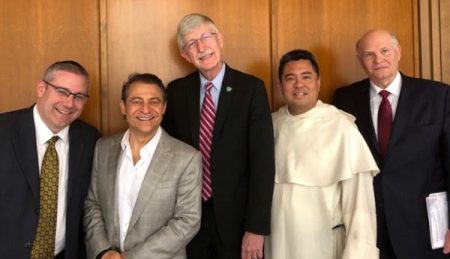
Is immortality moral? It’s important to recognize that our morals change over time. Today, if I told you someone had the heart of a dead person transplanted into their chest to save their life, it would be considered a miracle. Go back 1,000 years, however, and the notion of organ transplantation would have been considered black magic. Surrogate pregnancy is another modern-day miracle that, in another era, would not have been accepted. That’s why I believe we’ll soon make a similar ethical and moral jump to extreme longevity.
Medical progress that saves lives is seldom subject to questions related to the morality of the research. We try to cure cancer, not on moral grounds, but in the desire to improve the quality of lives. It makes me wonder, other than the fact that religious scholars are weighing in here, why morality comes to mind.
At the start of our panel, Sanjay Gupta asked Rabbi Dr. Edward Reichman, to provide a historical context from the Old Testament about aging. “Adam lived to 930 years old,” stated Rabbi Reichman. “Methuselah lived to 969 years old. Abraham lived 175 years… Moses died at 120, and it is after Moses (in the Bible) that the human lifespan is set at its maximal to 120 years.” The Rabbi continued, “At the time of the flood of Noah, God pronounced that [humans] will be 120 years old. That did not occur immediately. [It] took roughly 750 years for the longevity of man to gradually taper down from roughly 900 years old to 120 years old.” Reichman cited the work of Nathan Aviezer, a contemporary scientist and physics professor in Israel who writes on the Torah from an Orthodox Jewish perspective. Aviezer’s interpretation is that, during this period, a divine intervention introduced specific genes which curtailed longevity, and it took several generations for these genes to proliferate and shorten the human lifespan. “It could perhaps be that we are attempting to identify those genes that God introduced at that stage of history and now reverse it to achieve that longevity again,” explained Reichman.
I find it difficult to understand how biblical references to the ages of Adam and Methuselah in a serious scientific discussion on aging is part of this discussion. First of all, the references come from one religious source, the Hebrew Bible, not from any other religious doctrine. That, in itself, suggests a bias that should be acknowledged. And as for morality, the bible as a reference in this regard stands on weak ground. There is more “eye for an eye” in the good book that weakens its argument as a source for moral authority. Then to seriously suggest that God corrected a mistake after the flood to alter the human genome so that our telomeres would shorten faster so that 120 years would be the top natural extent of human existence, is simply silly. When you consider that humans on average at the beginning of the 20th century lived only 40 years, it would seem God chose to cheat the vast majority of a life three times longer, and only recently, has decided to make amends.
From an evolutionary perspective, longevity wasn’t an advantage for most of history. The selfish gene theory had no use for humans after reproductive age (typically age 13). By age 26, your child was now having a child, and, before food was abundant the best thing you could do was not take food out of the mouths of your grandchildren and instead give “your bits back to the environment.”
“Aging is not just a running down of the system,” stated Francis Collins. “It is a programmed process. Evolution probably had an investment in having the lifespan of a particular species not go on forever. You’ve got to get the old folks out of the way so the young ones have a chance at the resources.” Today, thanks to an ever-increasing abundance of food, we’re able to live into old age without consuming resources that should have gone to our children and grandchildren.
The theory about why death happens goes back to the very beginnings of life here on Earth. Without death, there is no recycling of the finite resources of the planet. The biomass that has built up over the 3 to 3.5 billion years since life first emerged has a natural limit on a planet of our size. Death makes life possible by endlessly recycling organic materials necessary to sustain our existence.
When I was in medical school, I saw a documentary on certain species of whales, turtles, and sharks that could live hundreds of years, and in theory, as long as 700 years. I remember thinking, “If they can, why can’t we?” As an engineer, I figured it was either a hardware or software problem. Today we are finally entering an era where we are developing the tools to read the software and modify the hardware.
In his panel remarks, Collins, who led the Human Genome Project, shared how we’re already able to manipulate the longevity of simple organisms like the roundworm C. elegans. “Research has shown that there is a limited set of genes that determine the lifespan of that little wriggly creature and that with an appropriate manipulation of those genes, you can cause those worms not just to [live longer], but maybe as long as four or five times their normal lifespan,” he explained. “Imagine applying that to humans.”
My friend Ray Kurzweil, who co-founded Singularity University with me and is a Director of Engineering at Google, talks about the concept of “longevity escape velocity.” It’s the notion that, in the near future, science will be able to extend our life by over a year for every year we live. Ray’s prediction is that we’ll reach longevity escape velocity in just 10 to 12 years.
What does that mean? It means that my two 7-year-old boys can have a potentially indefinite lifespan, simply because they’ll intercept a multitude of exponentially growing technologies as they age.
Can we extend the healthy human lifespan past 120? Can humans live indefinitely? We’ll find out — and I believe we’ll discover the limits of longevity-extending technology in the next 20 or 30 years, not the next 50 or 100 years.
What determines the end of a cells life is a process called apoptosis. In our DNA which organizes in a cell as chromosomes, we have base pair sequences called telomeres. They appear at the end of each chromosome and act as buffers to ensure the accuracy of replication. An RNA protein telomerase is responsible for maintaining the telomeres. But telomeres during cell division do not replicate eventually leading to a point when the cells no longer replicate. That’s apoptosis and the natural end-of-life point for individual cells. The point in time when a cell’s telomeres no longer act as buffers in successful chromosome replication is known as the Hayflick Limit, first discovered in 1961. But we know some cells don’t reach the Hayflick Limit ever. We see this in cancer which can infinitely replicate itself with telomeres and telomerase remaining whole and active. Similarly, egg and sperm cells never see their telomeres degrade. Researchers believe that women may live longer on average because estrogen influences telomere integrity. And other researchers are looking into stopping telomere degradation by stimulating RNA telomerase. That alone would lead to average lifespan in humans increasing by up to 30 years. And considering we are moving average lifespan into the mid-80s today, it would take us closer to that godly limit that Rabbi Reichman described in his interpretation of the biblical record.
Longevity enables a variety of positive externalities. Why retire at 70 years old, at the peak of your earning capacity, when you could potentially contribute to society for another 30+ years? Extending the human lifespan by 30 years — and postponing the retirement age — would generate the biggest global GDP boom ever. Regardless of your religious beliefs, you’ll soon have the option to take advantage of life-extending technology. And if you don’t want to live to 250, you don’t have to.
In closing, I found it promising that all the religious leaders on my panel agreed that adding a healthy extra 30 years would be desirable. I agreed and said, “I’m happy with an age-span target of 120 healthy years, after that we can negotiate another extension.”
If you would like to read more on this subject from postings here at 21stcentech.com type “immortality” in the search window. And for a better understanding of how chromosomes and telomeres work in particular, check out http://www.21stcentech.com/biomedicine-part-10-bioengineering-the-end-to-aging/.